
When we first introduced the Astrion HA100, our goal was to build something more than another smart home remote. We wanted to create a dedicated physical interface for Home Assistant — one that could evolve alongside your home and the way you use it.
Over the past year, that idea has grown considerably.
With the release of Astrion V1.6.0, we have reached an important milestone: the major development goals we set out for Astrion in 2026 have now been delivered.
This is more than a new software release. It is an opportunity to look back at how Astrion has evolved, what we have built together with the community, and where the platform stands today.
The Journey So Far: Building Beyond a Remote
Astrion started with a simple idea: smart home control should not always require reaching for a phone, unlocking a screen, and navigating through an app. A dedicated device, with a touchscreen and physical buttons, could make everyday interactions more immediate and accessible.
But we didn't want Astrion to remain limited to one way of controlling a home.
Throughout 2026, we expanded its capabilities in several important directions.
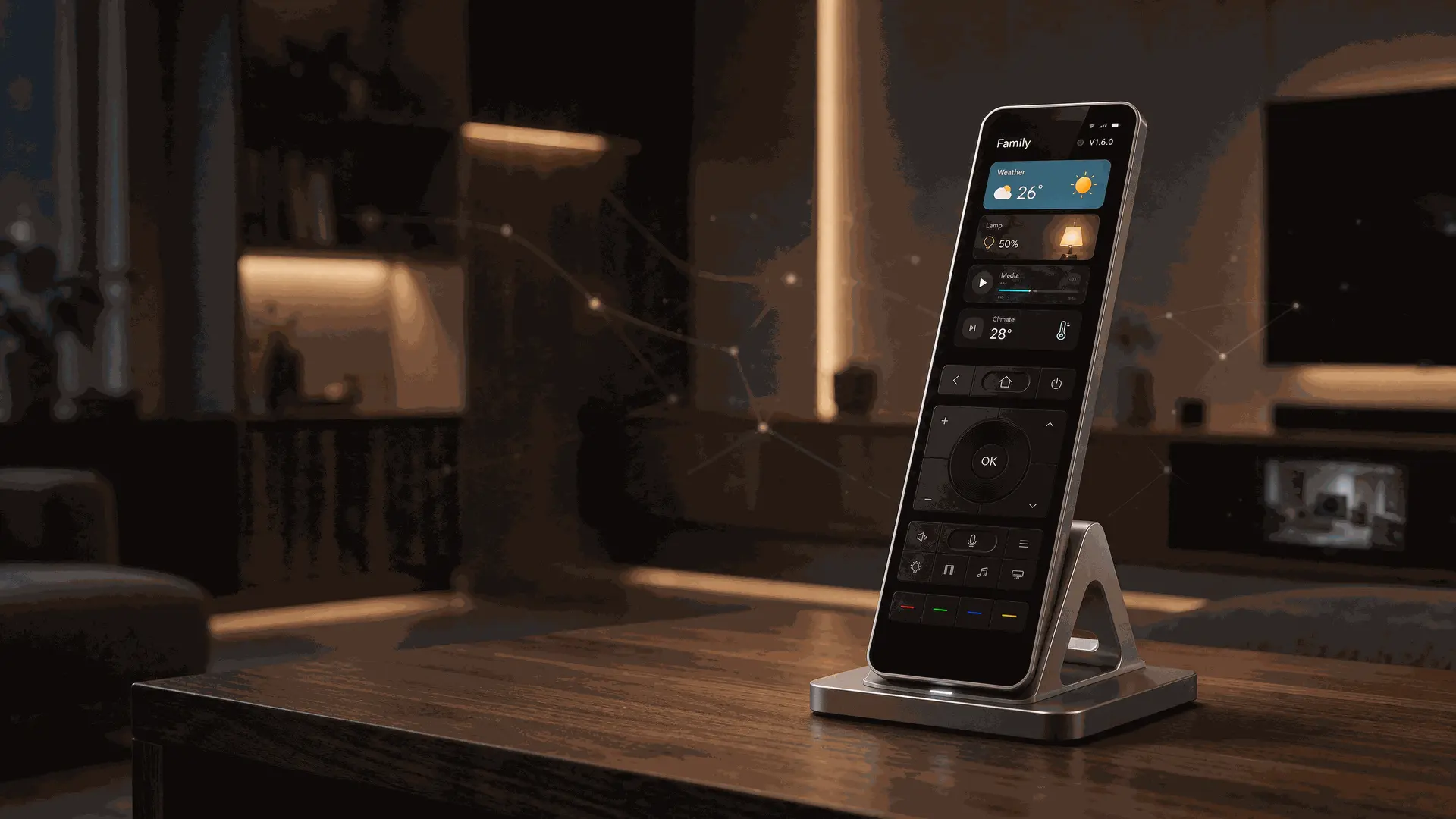
Native IR Control and Harmony HUB Integration
With V1.2.0, Astrion moved beyond its original Home Assistant interface.
We introduced local infrared control without requiring a cloud service, alongside Harmony HUB integration. This brought traditional AV equipment into the same control experience and made Astrion more useful in homes where smart devices and conventional entertainment equipment coexist.
It was an important step toward making Astrion a more flexible control interface for the whole home.
Deeper Home Assistant Integration
Subsequent releases focused on making Astrion work more naturally with Home Assistant.
We introduced dashboard navigation through automation actions, independent Android TV power control, and more flexible physical button mapping for TV cards. We also expanded device support and card capabilities, including weather details, Venetian blinds, Broadlink IR entity binding, and additional climate control options.
These updates were not simply about adding more controls to a screen. They were about giving users more ways to organize their devices and connect everyday interactions with the automations already running in Home Assistant.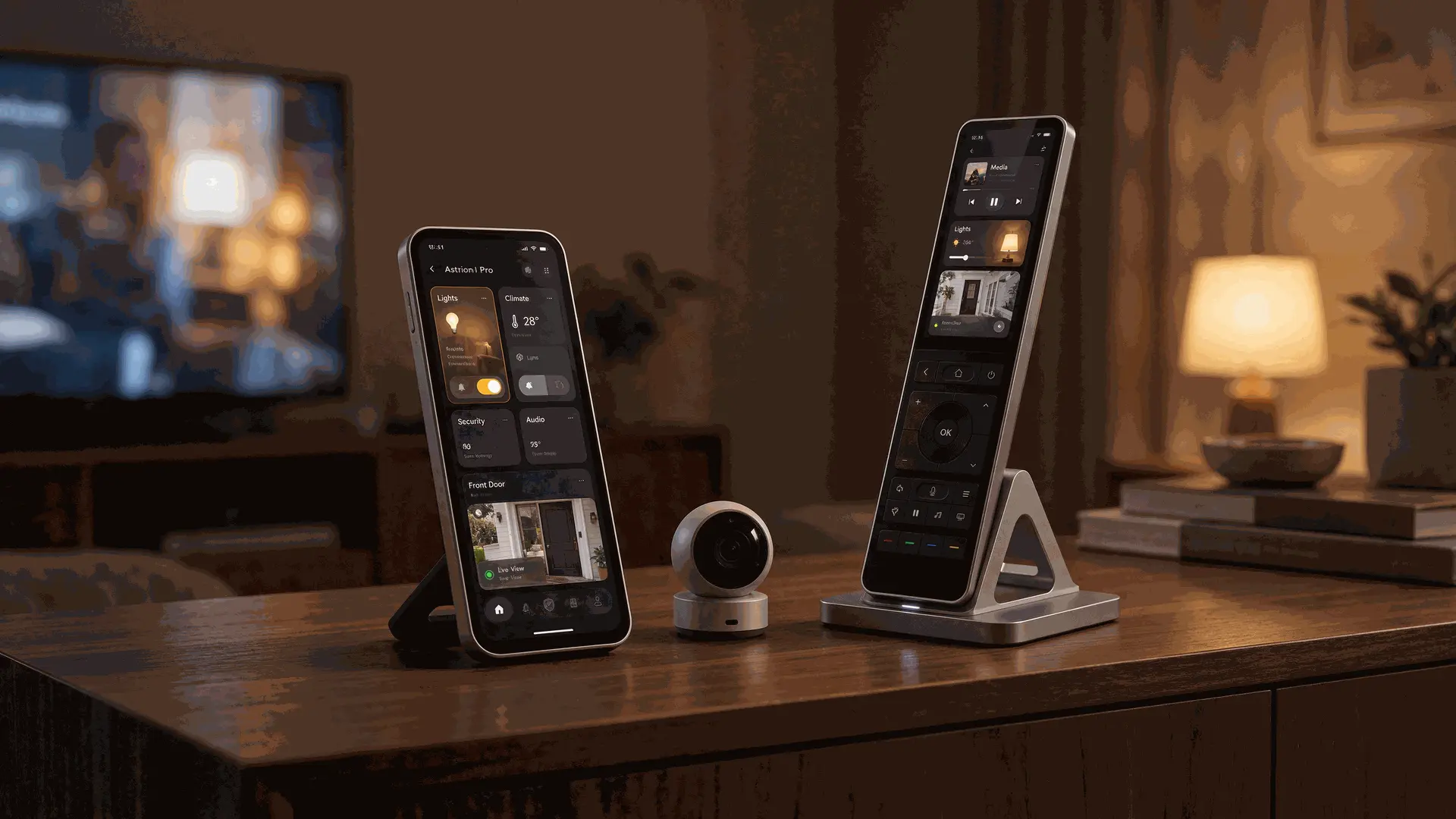
Astrion Pro: A New Hardware Platform
Software was only one part of the journey.
With Astrion Pro, we introduced a more capable hardware platform while retaining the familiar physical design and interaction concept of the original Astrion.
The upgraded platform brings Bluetooth HID and BLE capabilities, local infrared learning, and more hardware resources for users who want to explore custom dashboards and Android applications.
Astrion Pro was not designed to replace the HA100. It extends the Astrion family in a different direction, offering more room for customization and development while keeping the same fundamental idea: a dedicated interface for controlling the home.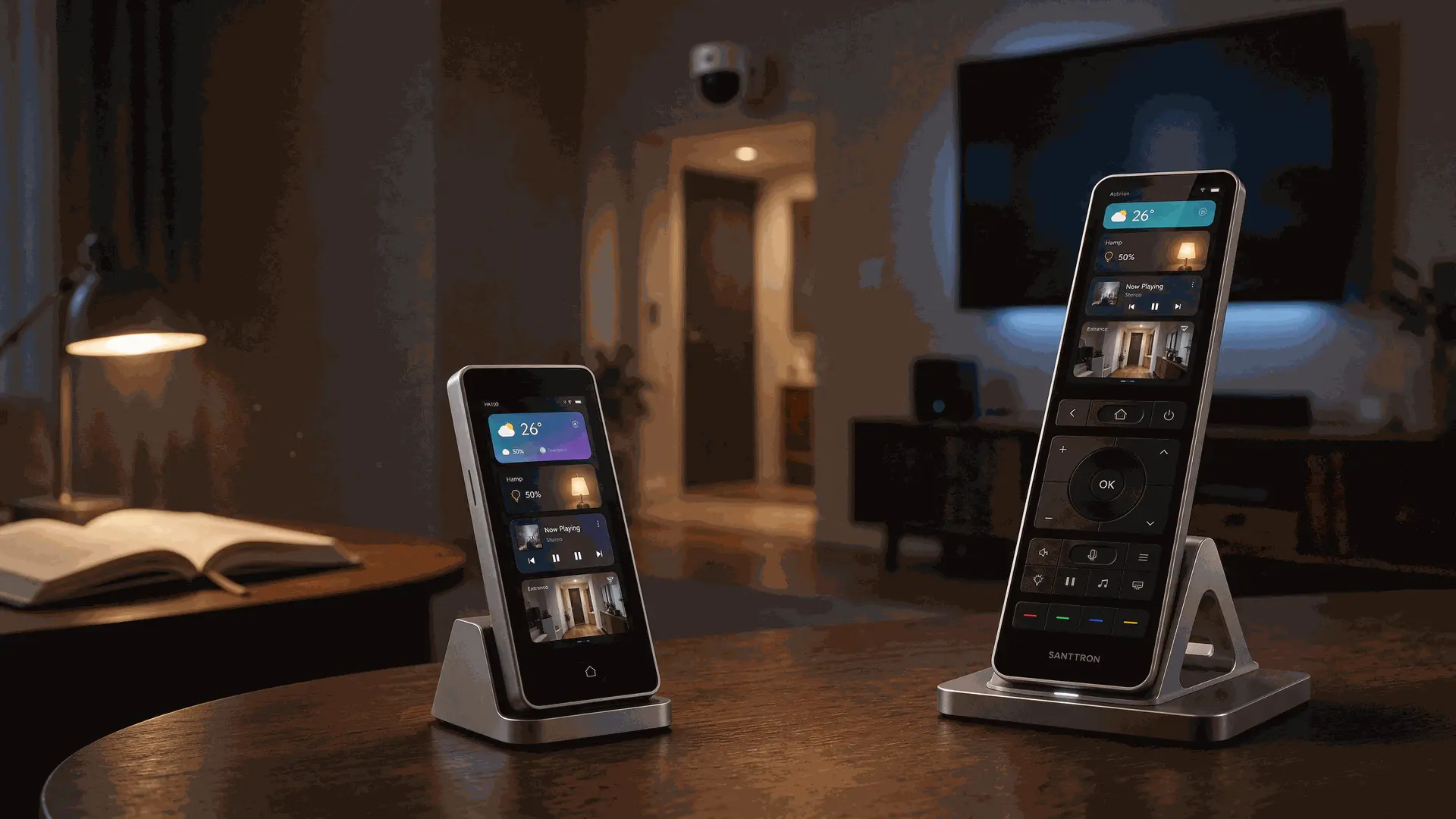
V1.6.0: Bringing More of the Ecosystem Together
The latest release brings several important capabilities together, extending Astrion's relationship with Home Assistant, multimedia services, and its own physical hardware.
What's New in V1.6.0?
V1.6.0 updates three parts of the Astrion experience: the remote software, ROS Card, and Astrion Home Integration.
Here are the major additions.
A More Flexible Interface
The new Two-Column Layout makes better use of the remote's display, allowing users to organize more controls within the same screen. Individual cards can still be configured to occupy a single column.
ROS Card also gains more flexible list appearance settings. Users can customize group backgrounds, icons, names, and badges, as well as override the appearance of individual entities.
The goal is simple: your control interface should adapt to the way you organize your home, rather than forcing every home to look the same.
Camera Cards
Camera Cards bring live camera feeds directly into the Astrion interface.
Users can display a live view as the card cover, or choose an icon or custom background instead. This makes it easier to bring cameras into the same interface used for everyday home control.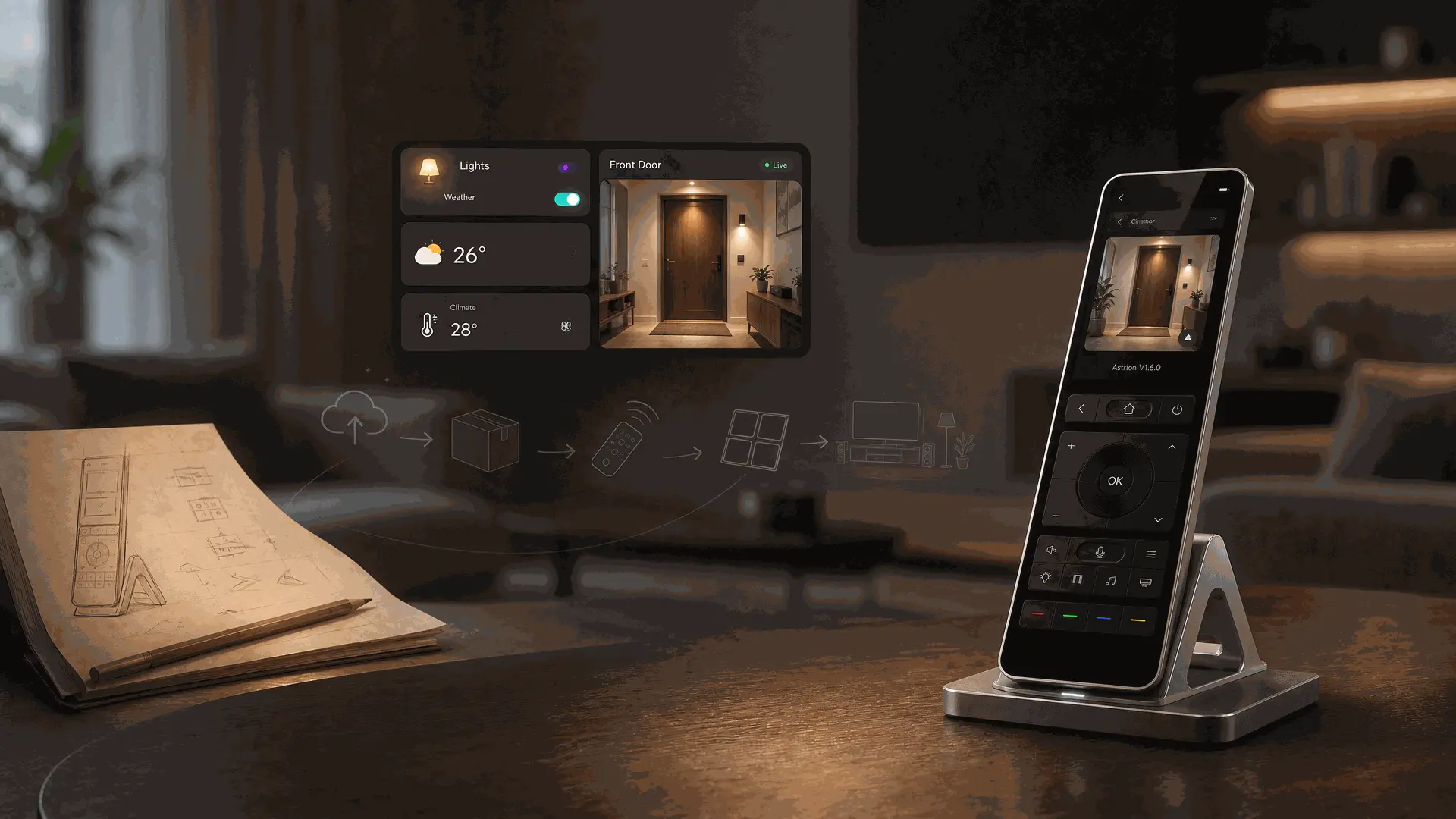
Music Assistant Integration
Astrion now supports Music Assistant, allowing users to access Music Assistant from the remote and play supported tracks through its built-in speaker.
Music Assistant playback entities can also be added to the ROS Card Media Player card, bringing music controls closer to the rest of the home interface.
It is another step toward connecting everyday entertainment with the same physical device used to control lights, climate, and other smart home functions.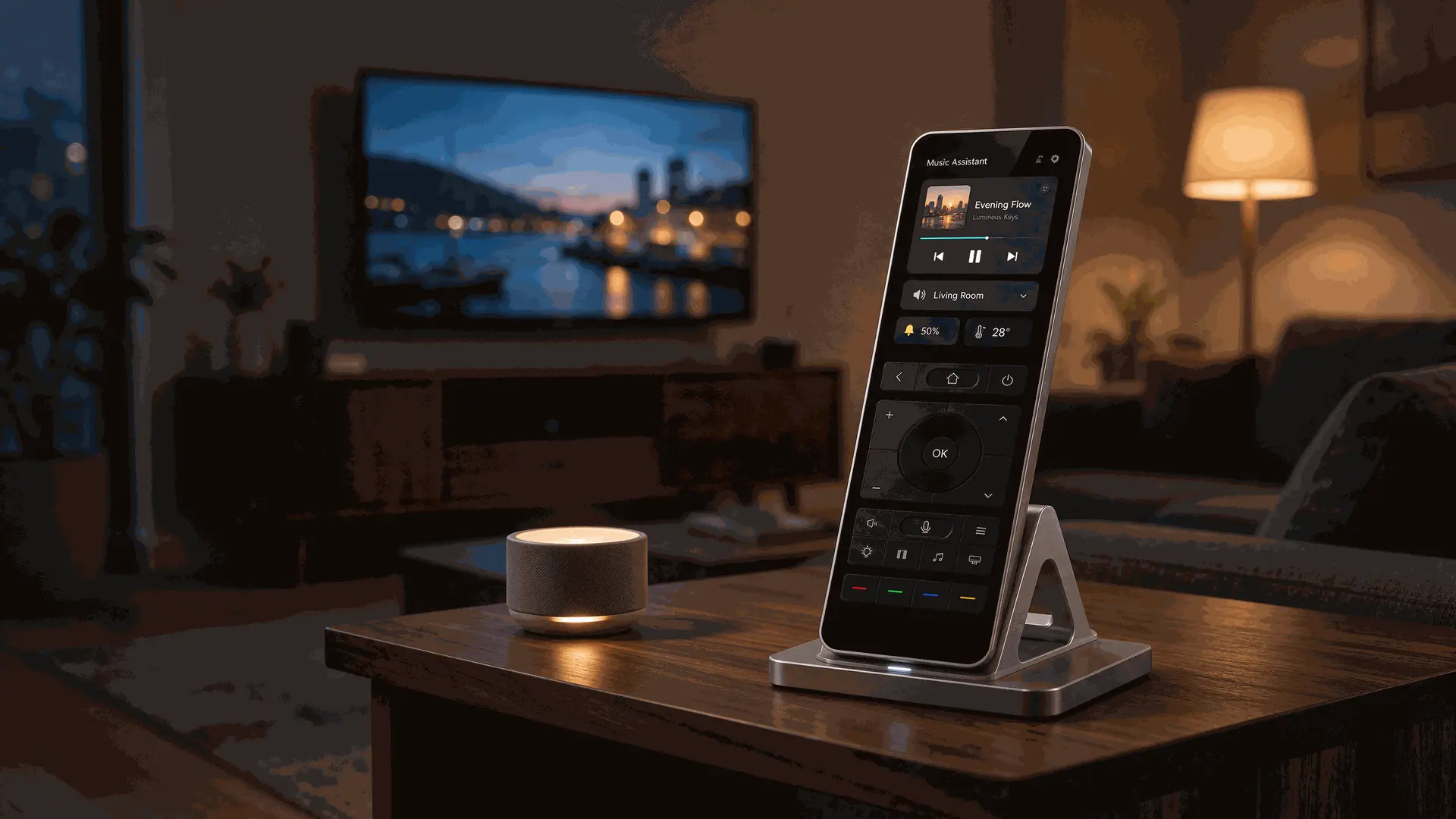
Remote Sensors and Automations
Astrion can now expose additional remote sensor information to the Astrion Home Integration in Home Assistant.
These entities can be used as conditions in Home Assistant automations. Users can also control supported remote functions, including the speaker and screen brightness, through the integration.
This creates more opportunities for the remote to participate in the wider smart home environment, rather than serving only as a device that sends commands.
Physical Button Events
V1.6.0 also adds support for reporting physical button double-click events to Home Assistant.
This gives users another way to connect the remote's physical controls with their own automation logic and makes the relationship between Astrion and Home Assistant more flexible.
For the full list of changes and compatibility details, see the Astrion V1.6.0 Release Notes.
Built Together with the Community
Astrion's development has never happened in isolation.
Many of the improvements introduced over the past year were shaped by conversations with people who use the remote every day. Feature requests, setup questions, bug reports, and ideas shared through our forum, Reddit, Discord, and direct support conversations have all helped us understand where the product needed to go next.
Some requests led to new features. Others helped us identify usability problems or rethink how certain controls should work.
We may not implement every suggestion exactly as it is proposed, but these conversations are an important part of how we prioritize development.
The progress from the early HA100 experience to V1.6.0 reflects that ongoing exchange between the product and the people using it.
Astrion is not just something we build for the community. It is something we continue to build with the community.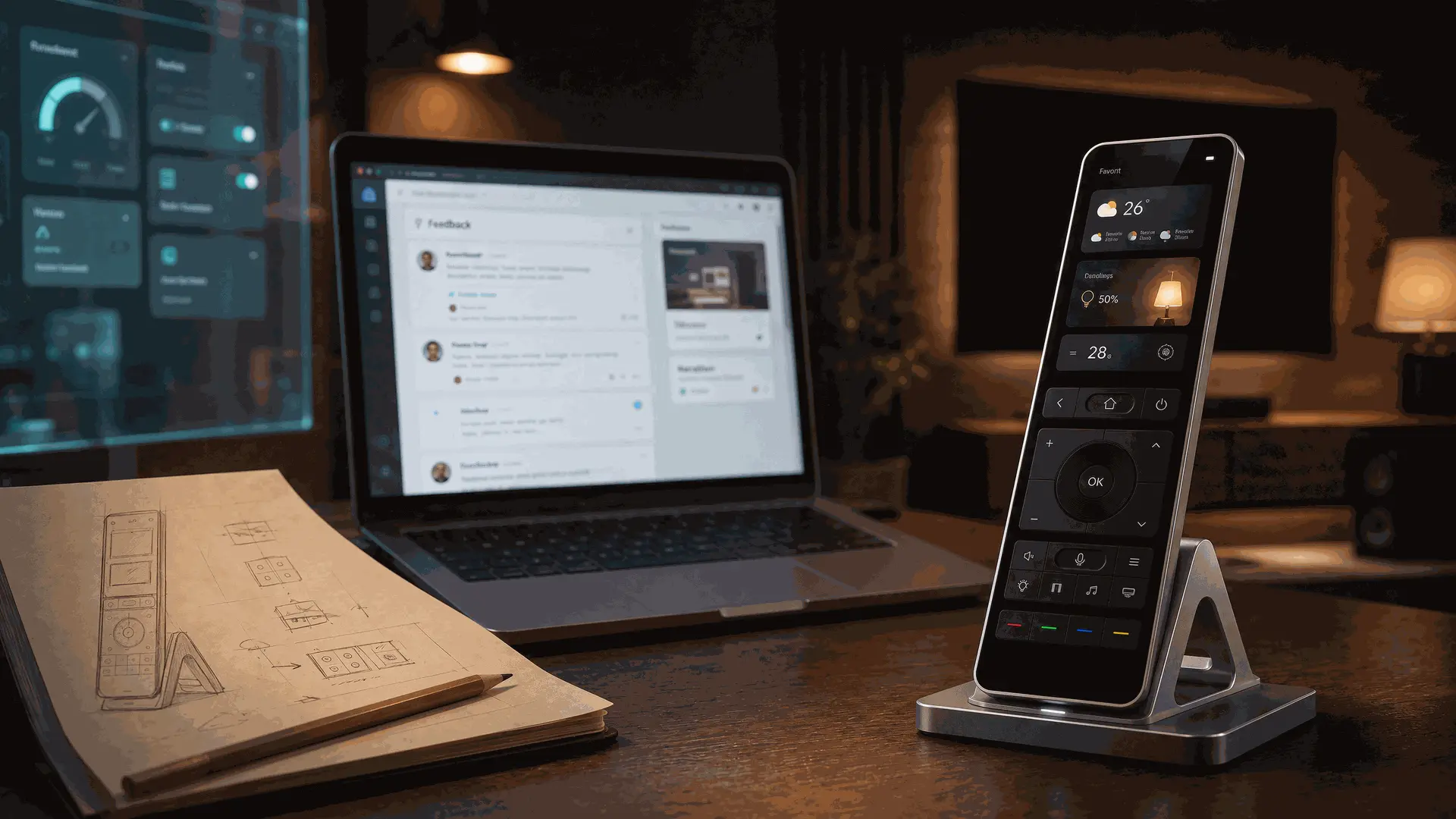
What's Next?
Reaching the major milestones in our 2026 roadmap does not mean development stops here.
Our focus now shifts toward refinement: improving stability, addressing edge cases, optimizing performance, and making the existing features easier to use and configure.
We will continue to listen to community feedback and evaluate new ideas based on their usefulness, technical feasibility, and how well they fit the Astrion experience.
There will always be more things worth exploring. But it is equally important to make what we have already built work well in real homes, every day.
Update Your Astrion
V1.6.0 involves three components, and all three need to be updated to V1.6.0 to use the full set of features:
- Astrion Remote (ROS App): Update through the remote's OTA updater.
- ROS Card: Update through HACS in Home Assistant.
- Astrion Home Integration: Update through HACS in Home Assistant.
After updating, follow the instructions in our Firmware Update Guide.
Thank you to everyone who has used Astrion, shared feedback, reported issues, tested new releases, and helped shape the product along the way.
What began as a dedicated Home Assistant remote has grown into a broader control platform. V1.6.0 marks an important point in that journey — and we are looking forward to what we can build next.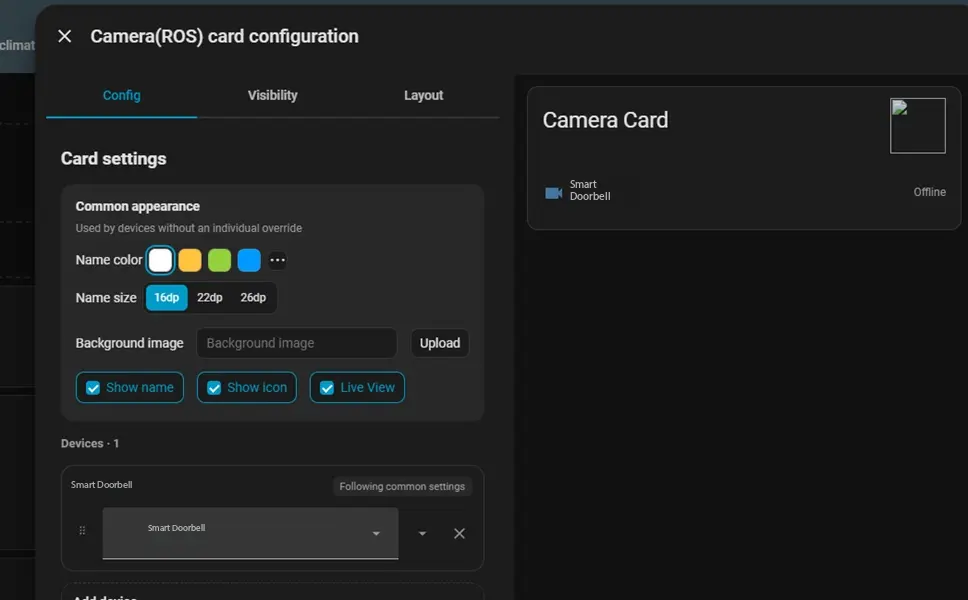
— The Sanytron Team
From Remote to Ecosystem: Astrion Completes its 2026 Roadmap with V1.6.0