
Human history is, in many ways, the history of tools.
A hammer lets us strike harder than our hands ever could.
A lever allows one person to move a stone that once required many.
A wheel lets us travel farther than our feet.
Glasses sharpen our vision.
A telescope extends our eyes to the stars.
A computer extends our ability to think.
Every meaningful tool is, in one way or another, an extension of ourselves.
The purpose of technology has never been to replace people.
It has always been to extend what people are already capable of.
The strange thing about smart homes is that, despite all the automation we've built, many of us still spend a surprising amount of time looking at our phones.
Sometimes it's to turn off a light. Sometimes it's to pause a movie. Sometimes it's just to check whether the garage door is still open. None of those actions are difficult. They just don't feel quite as natural as they should.
That never quite felt like the future I imagined.
The problem was never the phone.
The problem was asking one interface to represent every interaction. Phones are brilliant devices. They belong to us in a way few things do. They carry our messages, our work, our photos, our identities. A phone is personal in the deepest sense.
But a home isn't personal in that same way. A home is shared. It belongs to the living room, the kitchen, the hallway. It belongs to the family. And when the interface to that shared space is a device that only one person can unlock, something subtle breaks.
One Home Assistant user described their workaround to us: an old phone, permanently unlocked, sitting on the coffee table, connected to its own VLAN, running its own HA account. Anyone in the house could use it. It was clever. It was also a perfect illustration of the problem. The best solution they could find was to take a personal device, strip it of everything personal, and pretend it was something else.
That's when the question started to shift for us. Not "how do we make a better phone app?" but "what would a device look like if it belonged to the home rather than to any one person?"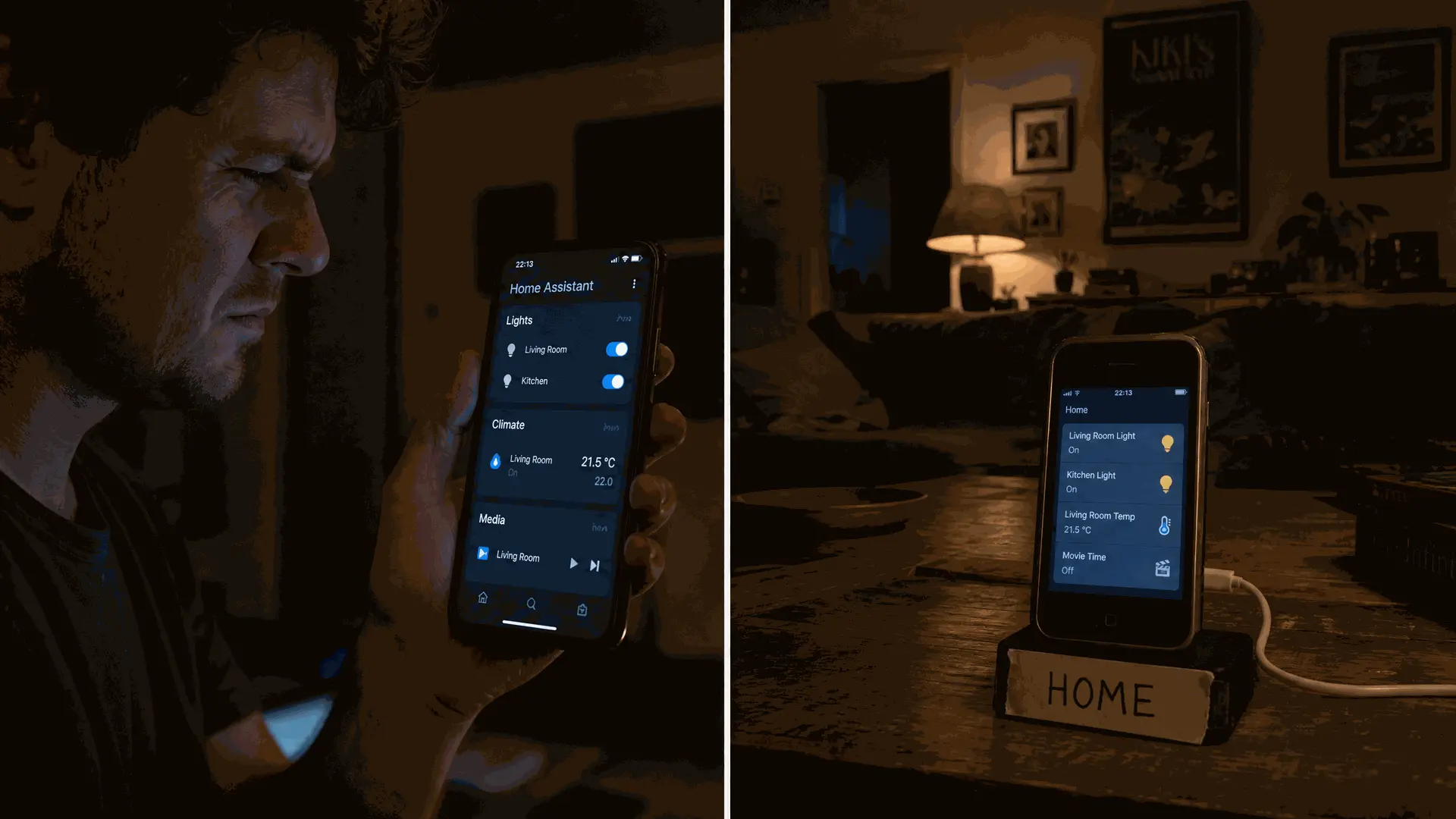
We didn't set out to build a remote
Looking back, I don't think we've been building remotes all these years. Over time, we realized we were not really building controllers. Controllers are designed around machines. What we were searching for was an interface designed around human life. We've been circling around the same question over and over again, trying to answer it a little better each time: how should people interact with increasingly intelligent spaces?
Long before Home Assistant became what it is today, we were building drivers, touch panels, and handheld controllers for ecosystems like Control4, RTI, ELAN, Crestron, and later Tuya. Some of those products worked well. Some taught us what not to do. But through all of it, the question never really changed. What did change was the world around us.
We didn't abandon those earlier platforms because they were bad. We moved because Home Assistant was becoming something fundamentally different: a community rather than a product. It represented an idea—that the tools shaping your daily life should belong to you, not to a license, a subscription, or a dealer contract.
Tools, at their best, do three things. They free our hands from repetitive work. They help us do more in less time. And when they're truly successful, they stop feeling like tools at all. They become extensions of our intention—quiet, unobtrusive, almost invisible. There's an old insight running through centuries of thought, from ancient philosophy to modern design: wisdom lies not merely in possessing tools, but in knowing how to let them disappear into everyday life. A good tool eventually stops feeling like a tool at all. It becomes part of the way we move through the world.
That shift changed what we wanted to build. Not another proprietary controller for a closed ecosystem. Something that belonged to the open web of Home Assistant. Something that felt like a natural part of the room, not a gadget that needed charging, updating, and troubleshooting every other day.
The fallback that isn't a fallback
Every smart home needs a way to control things when the network goes down, or when Home Assistant is restarting, or when a voice assistant decides to have a bad day. But the more we thought about it, the more "fallback" felt like the wrong word.
A fallback is something you resort to when the real thing fails. But in a human environment, reliability is not the opposite of intelligence. Physical controls aren't a fallback. For a lot of interactions, they're the better option even when everything is working perfectly.
One person described their evening routine to us. They use a remote to start a movie—three or four button presses, fast and familiar. But then, to adjust the lights, they have to reach for a tablet or phone. So they're juggling two devices for one activity. What they actually wanted wasn't more automation. It was one thing that handled both.
The goal isn't maximum automation. It's minimum friction.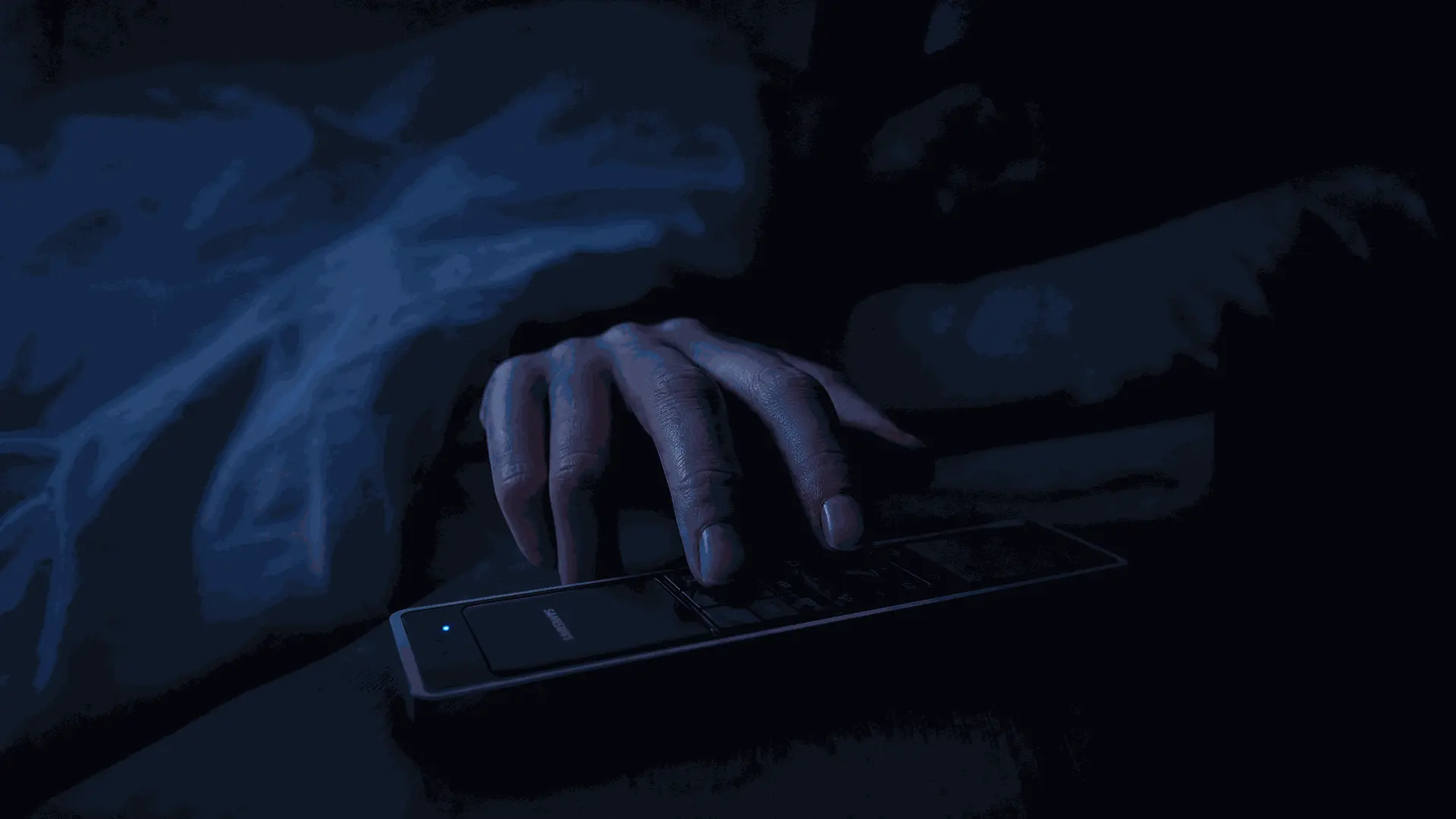
Why the buttons stayed
We've been asked more than once why Astrion has physical buttons when it already has a touchscreen. The honest answer is that we tried removing them. Every few design iterations, someone would propose a sleeker, button-free version. And every time, we'd test it and realize something was missing.
There's a difference between tapping glass and pressing a button, and it's not about nostalgia. It's about not needing to look. It's about the button being in the same place every time, responding to muscle memory rather than visual attention. The best interface is sometimes the one your body remembers before your mind does. It's about being able to pause a movie in the dark without your glasses on.
One evening I caught myself reaching for the bedside button with my eyes already closed. I wasn't thinking about scenes or automations. I just wanted the lights off. That interaction wouldn't have been improved by a touchscreen. It would have been made slightly worse.
Some moments call for a screen. Browsing media. Checking camera feeds. Some call for voice, especially when your hands are full. And some just call for a button you can find in the dark. The right interface depends on the moment. That's the role we eventually found ourselves designing for. Not a phone. Not a wall panel. Not a voice assistant. Something in between. That eventually became Astrion.
Learning to listen
One of the things that surprised us most was how much the community wanted to shape the product. Not just reporting bugs, but genuinely helping us figure out what to build next.
The shortcut button redesign came directly from this. When we originally designed the remote, we put device-specific icons on the buttons: Lights, Curtains, Music, Climate. It seemed logical. But users told us, politely at first and then more insistently, that many of them didn't own smart curtains or smart air conditioners. Those buttons sat unused, or got remapped to something completely different so the printed icon no longer matched the function.
Looking back, we realized we had designed for the homes we imagined rather than the homes people actually lived in. That was a humbling realization, and a useful one.
So we changed the buttons to universal playback controls—Play/Pause, Previous, Next—because almost everyone controls media, regardless of what other smart devices they own. It was a small change in hardware, but a bigger one in thinking. We stopped assuming we knew what people's homes looked like.
Our firmware roadmap has grown largely out of conversations that started on the forum. Someone describes how they use Astrion. Someone else points out a friction. A third person suggests a direction. Gradually, a picture emerges of what the community actually needs—often different from what we had assumed. That process has become one of the most rewarding parts of building this product. It's not just our roadmap. It's ours together.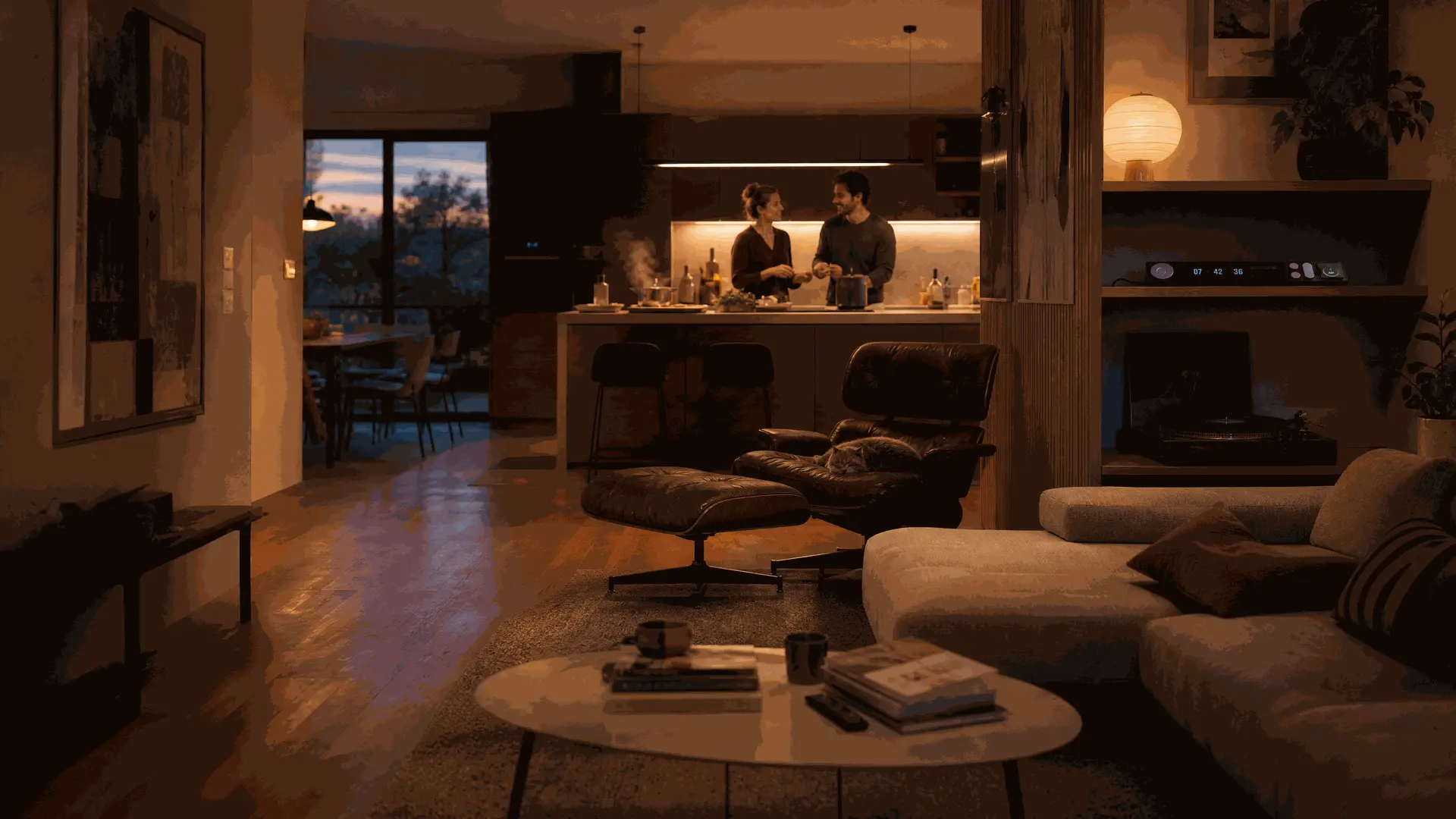
Living with it
A few months ago, someone left a comment on our forum that I haven't been able to stop thinking about:
"I believe a smart home is something we live alongside, not just use."
That sentence quietly draws a line between two different ways of relating to home automation. One treats the smart home as a tool you operate—issuing commands, checking dashboards, managing automations. The other treats it as an environment you inhabit.
If you're living with a smart home, the technology fades into the background most of the time. It's just there. It works. You interact with it the way you interact with a light switch—without thinking about it, without being impressed by it, without even noticing it. The measure of success isn't how many features it has. It's how little attention it demands.
A recent review from BeardedTinker captured this beautifully. He said the real story wasn't about a remote at all. It was about choosing the right interface for the right moment. Sometimes that's a phone. Sometimes it's voice. Sometimes it's a fully automated routine. And sometimes it's a device sitting quietly on the coffee table, waiting to be useful without asking for anything in return.
Technology has always promised us more than efficiency. Good tools reduce repetitive work, giving us back time and attention. Great tools become almost invisible. They extend what we can do without demanding that we think about them. But the best technology goes one step further. It doesn't simply connect people to machines. It helps people connect more deeply with one another. A smart home isn't successful because it contains hundreds of devices. It's successful when those devices quietly disappear, allowing the people inside the home to spend less time operating technology and more time living together.
Good automation doesn't remove human choice. It removes unnecessary effort. It shouldn't replace intention. It should protect it.
Perhaps that's what we've been trying to build all along.
Not a better remote.
Not another touchscreen.
Not another smart home product.
Just technology that quietly steps aside when life begins.
Because living with a smart home shouldn't feel like operating a computer.
It should simply feel like coming home.
The Home Was Never Meant to Be Operated