
The apartment wasn't special.
It sat on an ordinary street in Brooklyn, somewhere between Manhattan's noise and the quieter blocks further out. The elevator was slow. The hallway always smelled faintly of whatever somebody was cooking downstairs. In winter, the heating made a sound like an old man clearing his throat. But Jack and Rose loved the place.
Three bedrooms. Two living areas. A kitchen with nowhere near enough counter space—Rose mentioned that at least once a week.
They had moved before. A few apartments here, a different neighborhood there. Each time they told themselves the next place would finally be home. This time, somehow, it was.
Maybe because of what had happened before. Many years ago, Jack had taken Rose to see Titanic. They'd both been young enough to believe a movie could tell you something about love that real life hadn't taught you yet. Rose cried. Jack pretended he didn't. They talked about the film all the way home. About what it meant to choose someone. What it meant to stay. What it meant to build a life together. Years later, when their daughter was born, they named her Venus. A little piece of that old dream. A reminder that love, if you were lucky, could become something you could hold.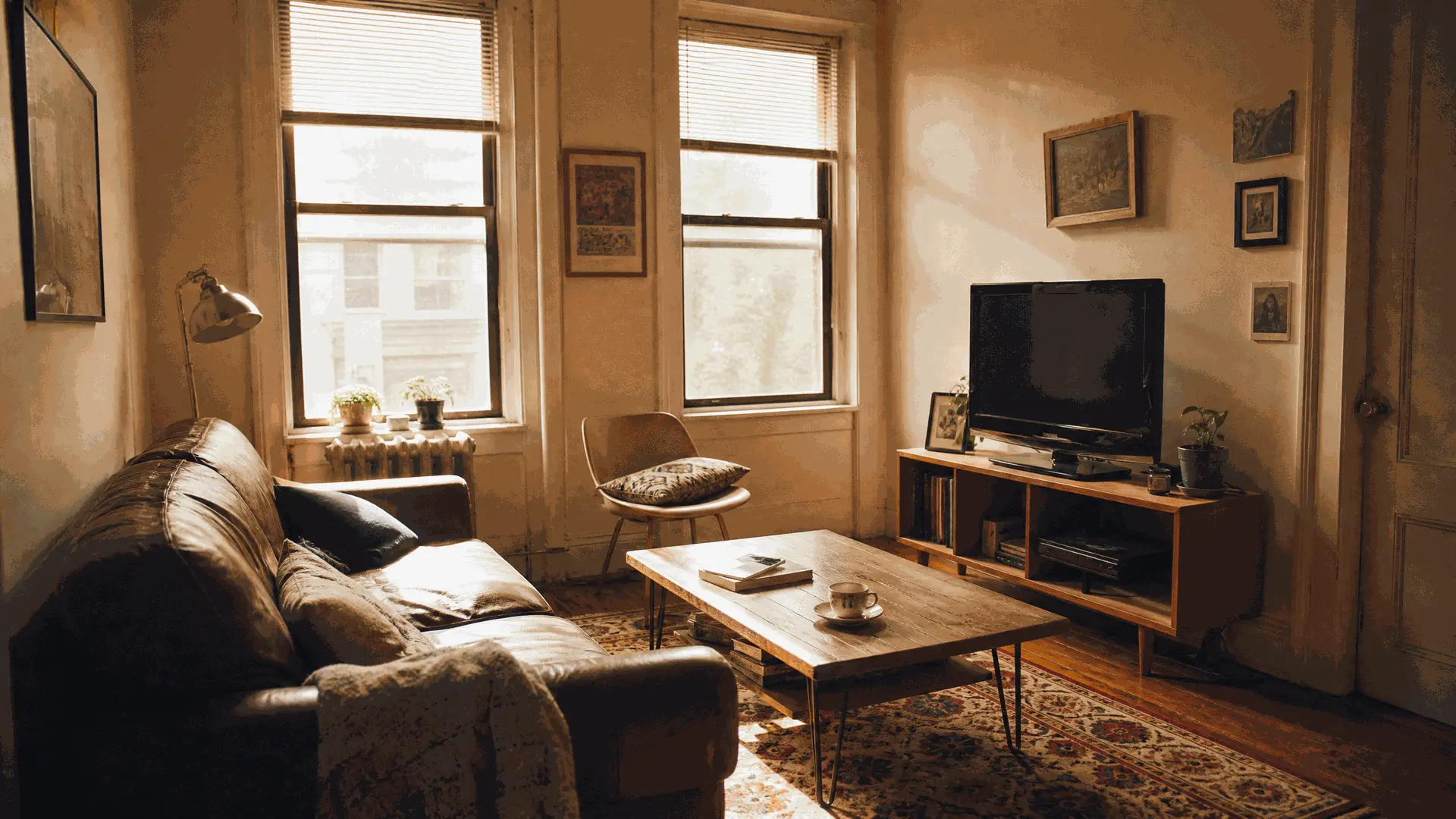
Then Venus arrived, and the living room changed.
There were toys under the sofa. Tiny socks in places nobody could explain. Books beside the coffee table. The remote control disappeared for days at a time—once from a drawer, once from inside a shoe, and once, rather mysteriously, from the refrigerator. Jack blamed Venus. Rose blamed Jack. Venus blamed nobody. She was two. She just pressed buttons.
2016 · The Man Who Thought He Could Fix It Himself
Jack had always been the kind of person who figured that if something was expensive, it was probably worth understanding before paying someone else to fix it.
Years earlier, he'd built his own computers—not because it was cheaper, though sometimes it was. He just liked choosing the pieces himself. Motherboard, CPU, memory, hard drive, graphics card. He'd spend a Friday night reading benchmarks and a Saturday comparing prices. Some parts came from Fry's or Sam's Club. Most arrived in brown Amazon boxes, or from an eBay seller whose feedback he'd checked three times before clicking Buy It Now. A TV or networking gear he'd buy at Costco. But the strange little things—adapters, modules, cables, sensors nobody else seemed to need—those came from the odd corners of the internet.
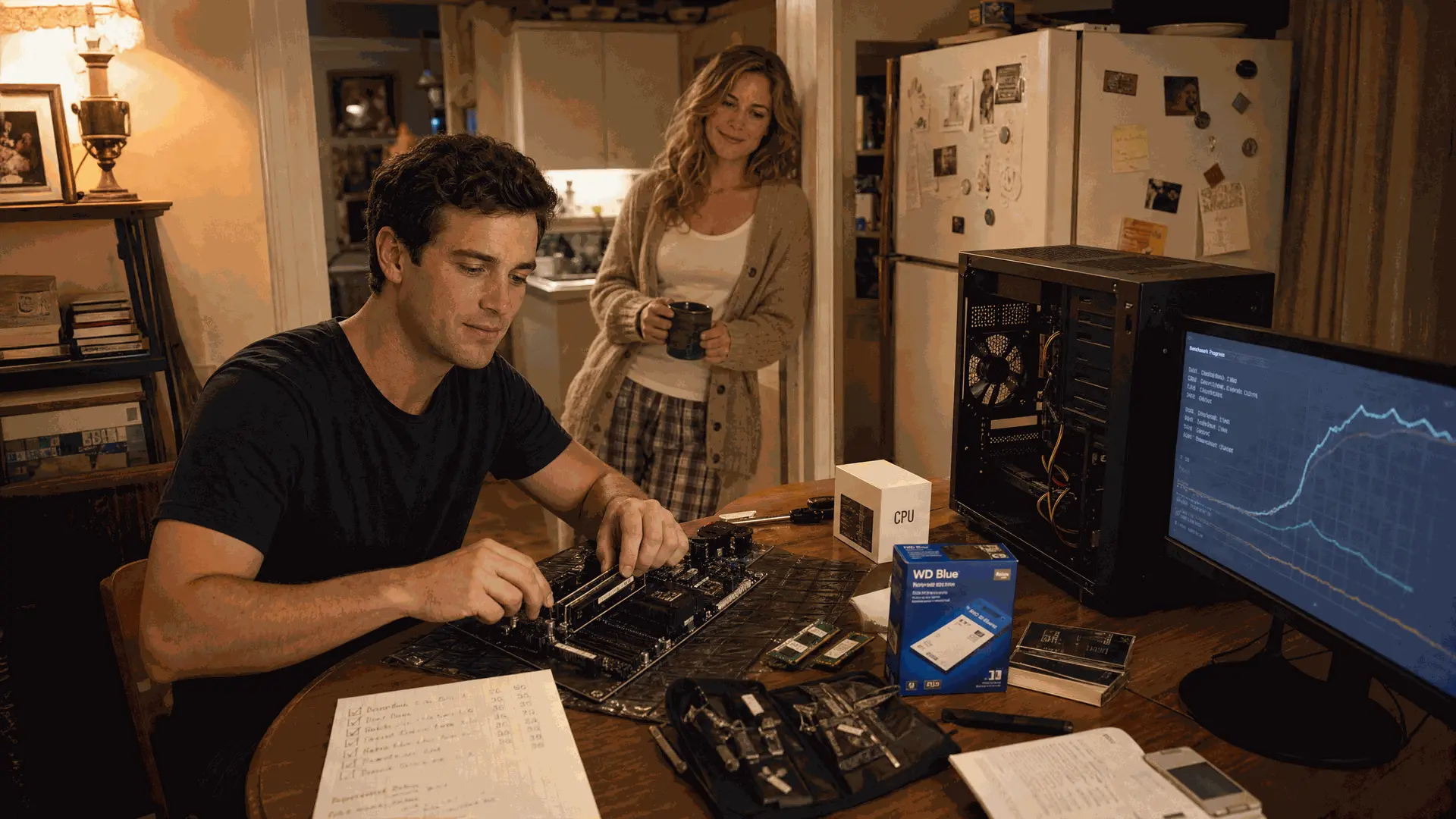
He didn't just assemble them. He pushed them.
overclocking.
specifically. He'd adjust the CPU settings carefully, watch the temperatures, run stability tests, back off when something wasn't right. He liked knowing the machine could do a little more than it was supposed to.
The first time Rose saw the benchmark numbers, she stared at the screen. "You made it faster?" Jack shrugged. "A little." "Without buying anything?" Jack smiled. She didn't really understand overclocking. She just understood that Jack had somehow made the computer faster without buying a new one. For a few weeks, she looked at him like he'd performed a minor miracle. Jack enjoyed that more than he'd ever admit.
But it wasn't really about performance. Jack simply enjoyed finding the point where something ordinary could do a little more. Computers had taught him another habit too:
Tell the computer what to do once, and let it do the boring part afterward.
Over the years, he'd learned enough programming—some Java, early PHP, later Python—to make machines follow rules and repeat jobs. A script to rename files. Another to sort photos into folders. A tiny utility that checked a folder every few minutes and moved finished downloads where they belonged. Nothing impressive. But the principle stuck.
He wasn't an engineer by profession. He just had the engineer's bad habit of looking at ordinary things and thinking, I could probably make that work better.
Smart homes didn't seem much harder. At least not yet. There were companies that would design the whole house for you—Crestron, Control4, Savant, ELAN—if you had the money. And there were cheaper ways in: X10, Zigbee, Z-Wave, switches, sensors, appliance modules, IR blasters. Websites full of strange little boxes. Jack loved those places. Not because he wanted a smart home. Because he liked figuring things out.
He didn't think of himself as a smart-home enthusiast. He was just the kind of person who hated paying someone to do something he thought he could figure out himself.
One Friday evening, he came home late. The Samsung television was dark. A small red standby light glowed beneath the screen. Jack sat down and picked up the remote. Too many buttons. Too many menus. Too many things he didn't care about. He didn't want to think about HDMI. Or inputs. Or infrared codes. He wanted to watch television.
He pressed a button and said, mostly to himself: "I want to watch TV."
That was the beginning. Not of an AI system. Not of a grand architecture. Just a husband who wanted to sit down.
The First Little Box
Rose was the one who finally got him started.
She didn't mean to. She simply watched a lot of television. Sometimes it was Empire on FOX. Sometimes Grey's Anatomy. Sometimes a reality show Jack never quite understood but Rose somehow knew everything about. And sometimes it wasn't anything special at all. Rose just wanted something on while she folded laundry.
The problem was never the television. It was everything around it. There was the Samsung TV remote. The cable box remote. The Blu-ray remote, which they barely used anymore. And another remote for the receiver that Jack insisted they might need someday. They all looked different. They all had too many buttons. And, naturally, the one Rose needed was never the one in her hand.
One evening, she stood in front of the television holding two remotes. “Which one?” Jack looked up from his laptop. “The Samsung.” She held up the other one. “This?” “No. That's the cable box.” Rose looked at the coffee table. “And this?” “That's the receiver.” She stared at the three remotes. “Why do we need all of these just to watch television?” Jack laughed. “I don't know.” Rose sighed. “It's ridiculous.”
Then she picked up the right remote, pressed a few buttons, found her show, and sat down. Five minutes later, she had completely forgotten about the remotes. Jack hadn't. He went back to his laptop. But the question stayed somewhere in the back of his mind.
A few days later, it happened again. “Jack, which one turns on the TV?” “The Samsung.” “And the cable?” “The other one.” “Why can't one of them just do everything?” “I don't know.” Rose found the right remote. Then she was watching her show again. Jack went back to whatever he had been doing.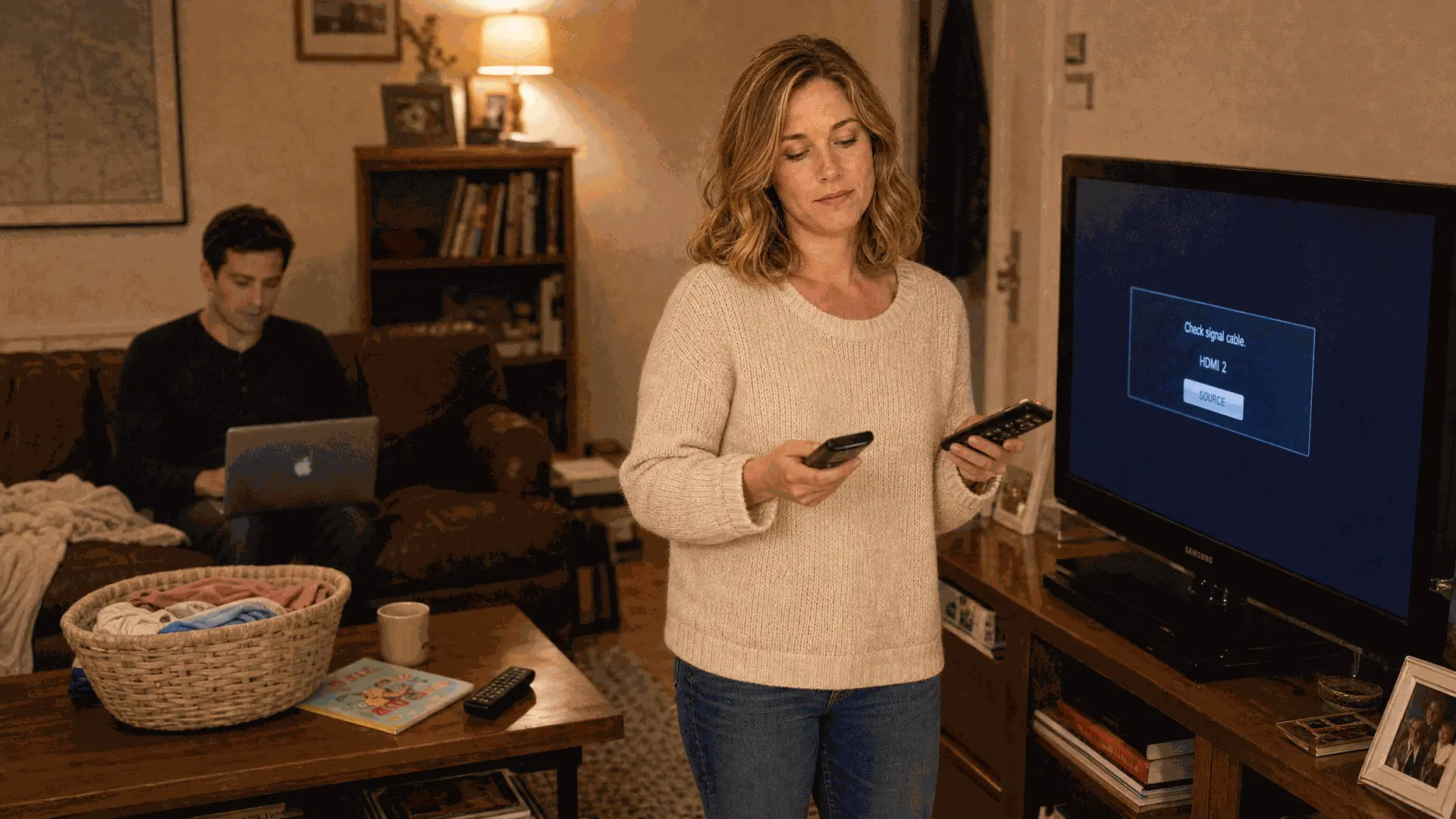
A week later, it happened again. Then again. Nothing dramatic. Just three remotes on a coffee table. A few seconds of confusion. A small complaint. Then life moved on. Rose had forgotten about the problem by the time Jack started looking into it. Jack hadn't. That was usually how these things started.
He started noticing how often she reached for the wrong remote. How often the television was on the wrong input. How often one of them had to get up and look behind the cabinet because something had been unplugged or changed. None of it was serious. That was precisely why it bothered him. It was the kind of problem that was too small to call someone about, but too repetitive to ignore forever. And Jack had always been particularly bad at ignoring problems like that.
He looked at the remotes again. He had built computers because he didn't like being told what hardware he was supposed to buy. He wrote little programs because he didn't like doing the same boring thing twice. This seemed like the same kind of problem. Not a big one. Just an annoying one. There had to be a better way.
So Jack started looking. He read forums. He watched YouTube videos. He stayed up late looking at home-automation websites after Rose had gone to bed. He wasn't trying to build a smart home. He wasn't even particularly interested in smart homes. He just wanted Rose to stop asking which remote she needed. And, if he was being honest, he wouldn't mind never having to answer the question himself again.
The first solution he found was almost embarrassingly simple.
Control the power.
He bought an Insteon ApplianceLinc 2456S3, a small plug-in module that could switch the load on and off.
That evening, he opened the app.
ON.
Click.
The relay closed. The little indicator light came on. Jack smiled. Then he looked at the television.
Nothing. He waited. Still nothing.
He picked up the Samsung remote and pressed Power. The screen came alive. Jack looked back at the little Insteon module. It had worked perfectly. And yet it had failed completely. He frowned. The module could switch the power. But that wasn't what Rose had actually asked for. She hadn't wanted the television to have electricity. She wanted to watch television. Jack sat there for a moment. Then he smiled.
There was probably another box for that.
Aha Moment #1
Capability is not intent.
A device can do something. That doesn't mean it knows what a person is trying to accomplish.
Jack didn't know the word for it yet. He just knew that the first box had failed because it could only see the wire, not the person holding the remote. That distinction would follow him for years.
The Black Box
Jack went looking again.
This time he found a small IR hub. A BroadLink RM Pro. It was cheap. It was black. It looked vaguely like something that belonged behind a television rather than on one. Jack liked it immediately.
He taught it the Samsung remote's Power command. A command was the smallest thing Jack could ask a device to do: Power on. Change input. Raise volume. Nothing more.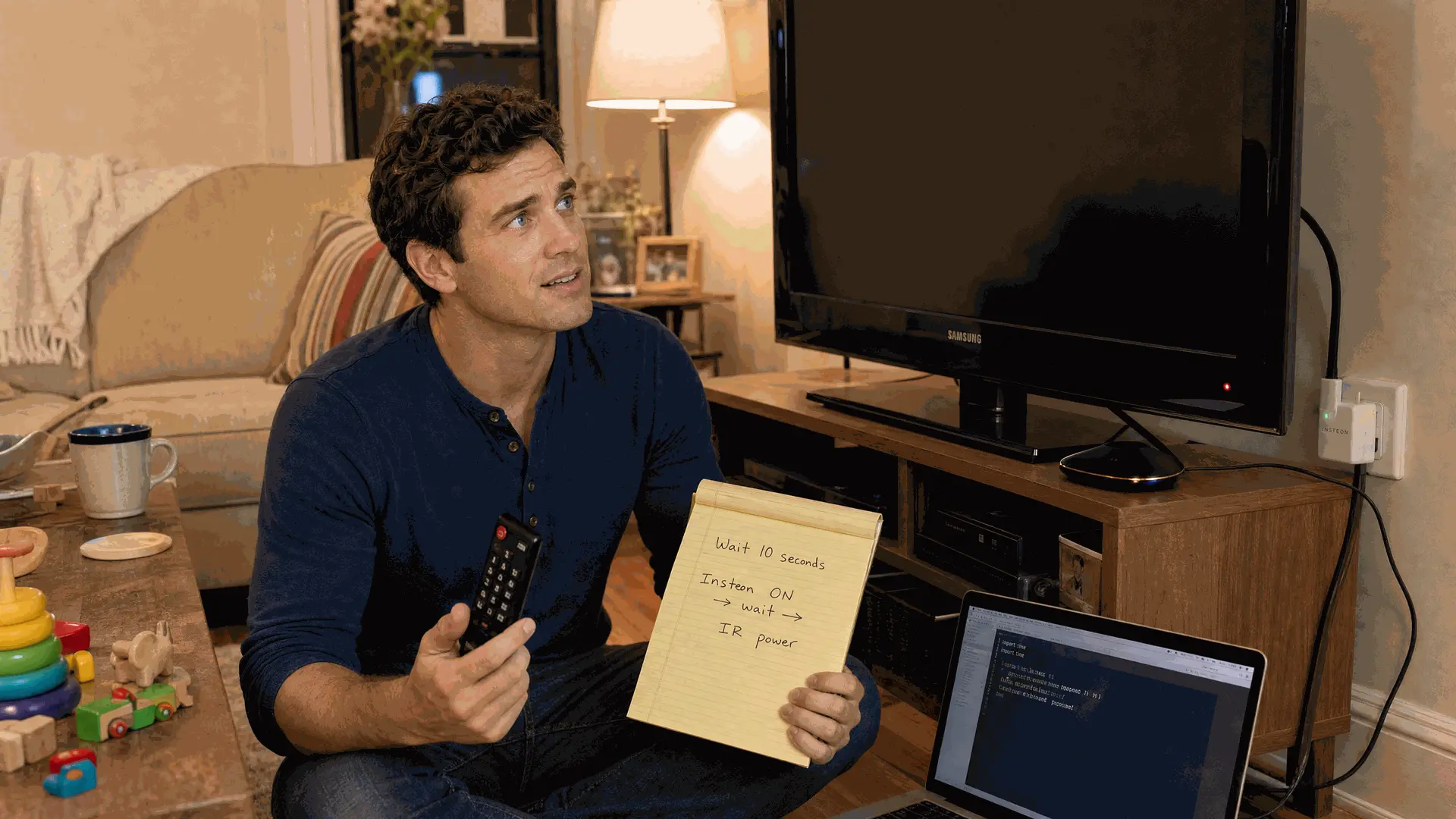
Then he connected the pieces in his head.
Power
↓
Wait
↓
HDMI
He tried it. The television turned on. Jack looked at the screen. Then at the little box.
Then back at the screen.
“Okay.” Rose was folding laundry on the sofa. She looked over.
“What?”
“Nothing.”
The next problem appeared almost immediately. The television was on. But it was on the wrong input.
Jack had solved the question: How do I turn the TV on? Now he had another: How do I make it ready to watch something?
So he taught the IR hub another command. HDMI 1. Then the cable box.
Power
↓
Wait
↓
HDMI
↓
Wait
↓
Cable Box
Three commands had become a sequence.
One button. The television woke up. The input changed. The cable box appeared. Jack leaned back. Rose looked at him. “You actually did it?” Jack shrugged. “I think so.” She smiled. For the next few days, Rose looked at him with a little more admiration than usual. Jack pretended not to notice. He definitely noticed.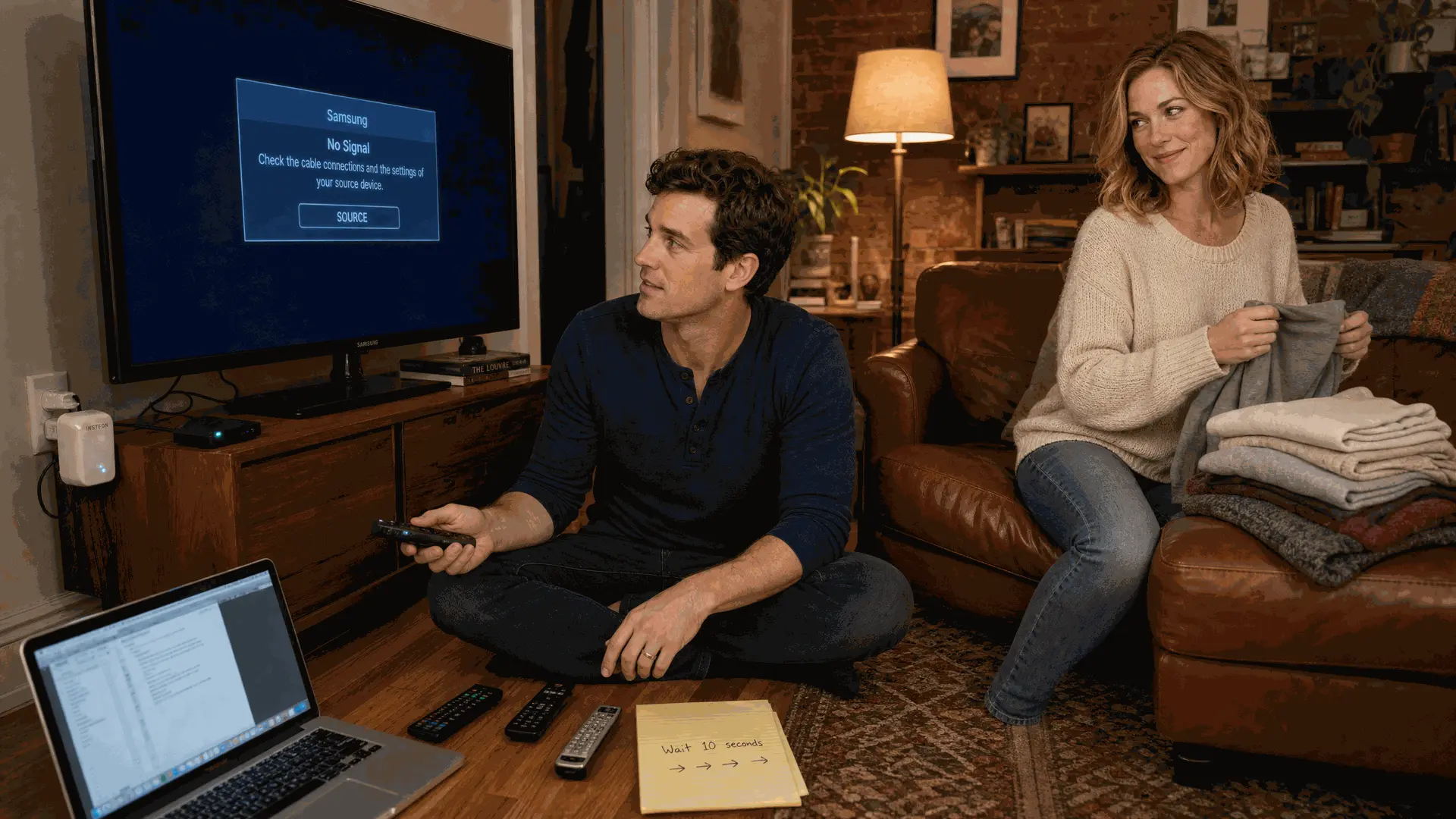
Then, naturally, it stopped working. Not every time. Which was worse. Sometimes the TV came on perfectly. Sometimes it switched inputs too quickly. Sometimes the cable box wasn't ready. Sometimes the infrared command arrived before the television had finished waking up. Sometimes nothing happened at all.
Jack changed the timing. Tried again. Changed it back. Tried again. At one point he was sitting on the floor in front of the TV with three remotes beside him and a laptop balanced on his knee.
Rose walked past. “Still broken?” “Sort of.” She looked at the mess. “Maybe it's not worth it.” Jack looked up. For a moment, he considered giving up. Then Rose smiled. “You'll figure it out.” Jack smiled back. “You think?” “I know you.” She picked up the laundry. “Just don't spend all night doing it.”
Jack waited until she was gone. Then he turned back to the laptop. He added a delay. Ten seconds. He pressed the button. The television powered on. The screen waited. The input changed. The cable box appeared. Jack stared at it for a second. Then he laughed.
It wasn't sophisticated. It wasn't even particularly smart. But Rose could now sit down, press one button, and start watching television without figuring out which remote did what. That was enough. At least for now.
Aha Moment #2
The right command at the wrong time was still the wrong command.
Later, Jack would learn the word: Timing.
He didn't need the word. He just knew that sometimes the right thing at the wrong moment was still the wrong thing. And somehow, that made the whole thing feel less like electronics and more like dealing with a person.
2017 · The Year Venus Learned What Buttons Did
Venus was four when she discovered the remote. Of course she did. Jack found her on the carpet one afternoon, pressing buttons with extraordinary concentration. Click. The channel changed. Click. The volume disappeared. Click. The screen went black.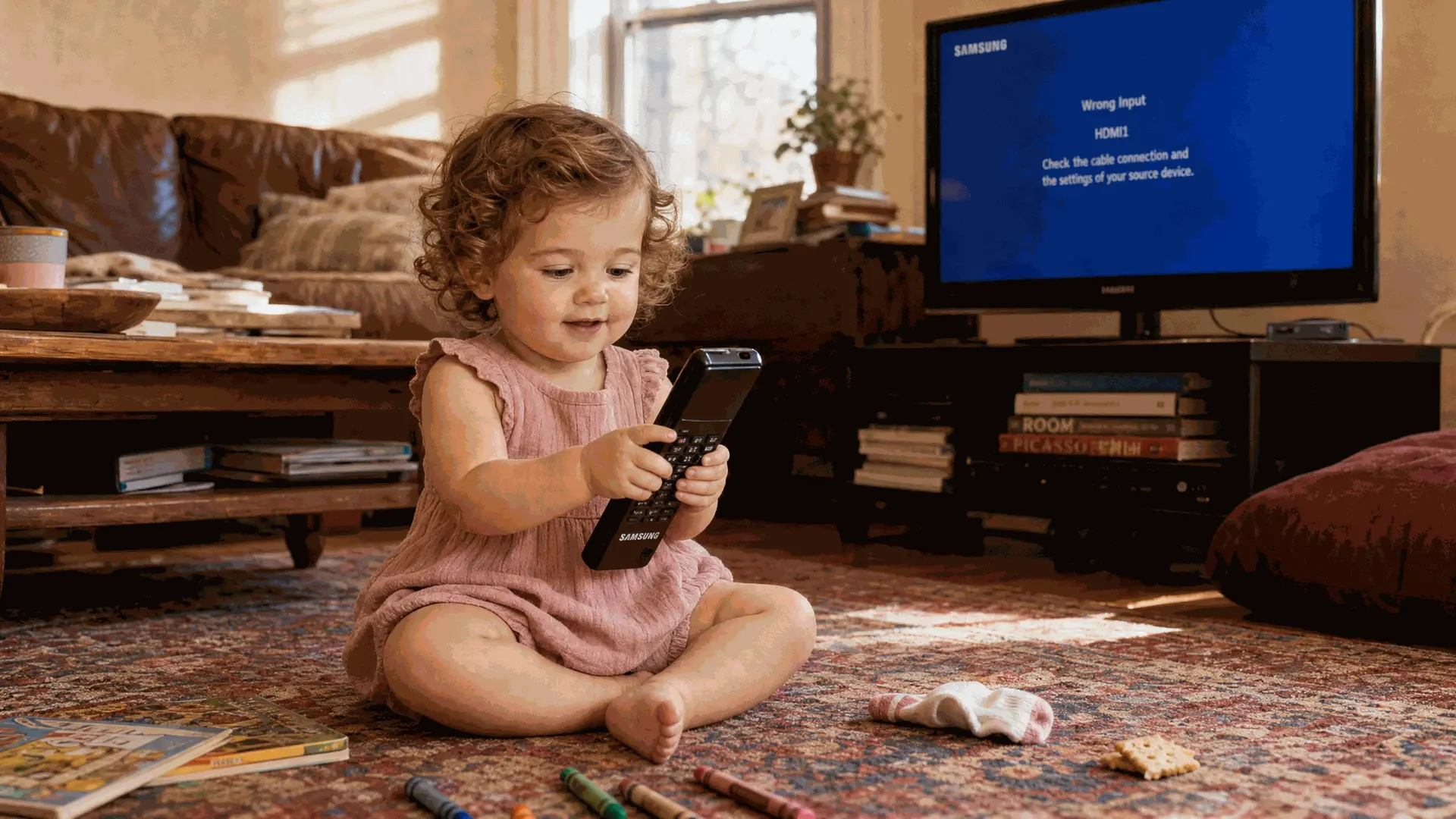
Venus looked delighted. Jack did not. The problem wasn't Venus. The problem was Jack's system. It assumed the television was in the state it expected. Reality had other ideas. Sometimes the TV was already on. Sometimes it was sleeping. Sometimes somebody had changed the input. Sometimes Venus had pressed something nobody knew about. Jack's automation sent commands. But it didn't know what the television was actually doing.
So he bought a little plug-in power meter. A P3 Kill A Watt. The kind you could find at Home Depot or online for thirty dollars or so.
He plugged the television into it. And suddenly he could see. Almost zero watts meant the television was off. A tiny amount meant standby. More meant the screen was awake.
Jack realized that sending commands wasn't enough. He needed to know what the television was actually doing.
That was state.
And then something else became obvious. A command was something you sent. Feedback was what came back. Without feedback, the system was mostly guessing.
Aha Moment #3
A command tells a device what to do.
State tells you what the device is actually doing.
And feedback is what closes the gap between the two.
That distinction would stay with him for years. Venus wasn't a troublemaker. She was just a kid. But she was the first one to force Jack to admit a hard truth: the world does not stay where your script left it.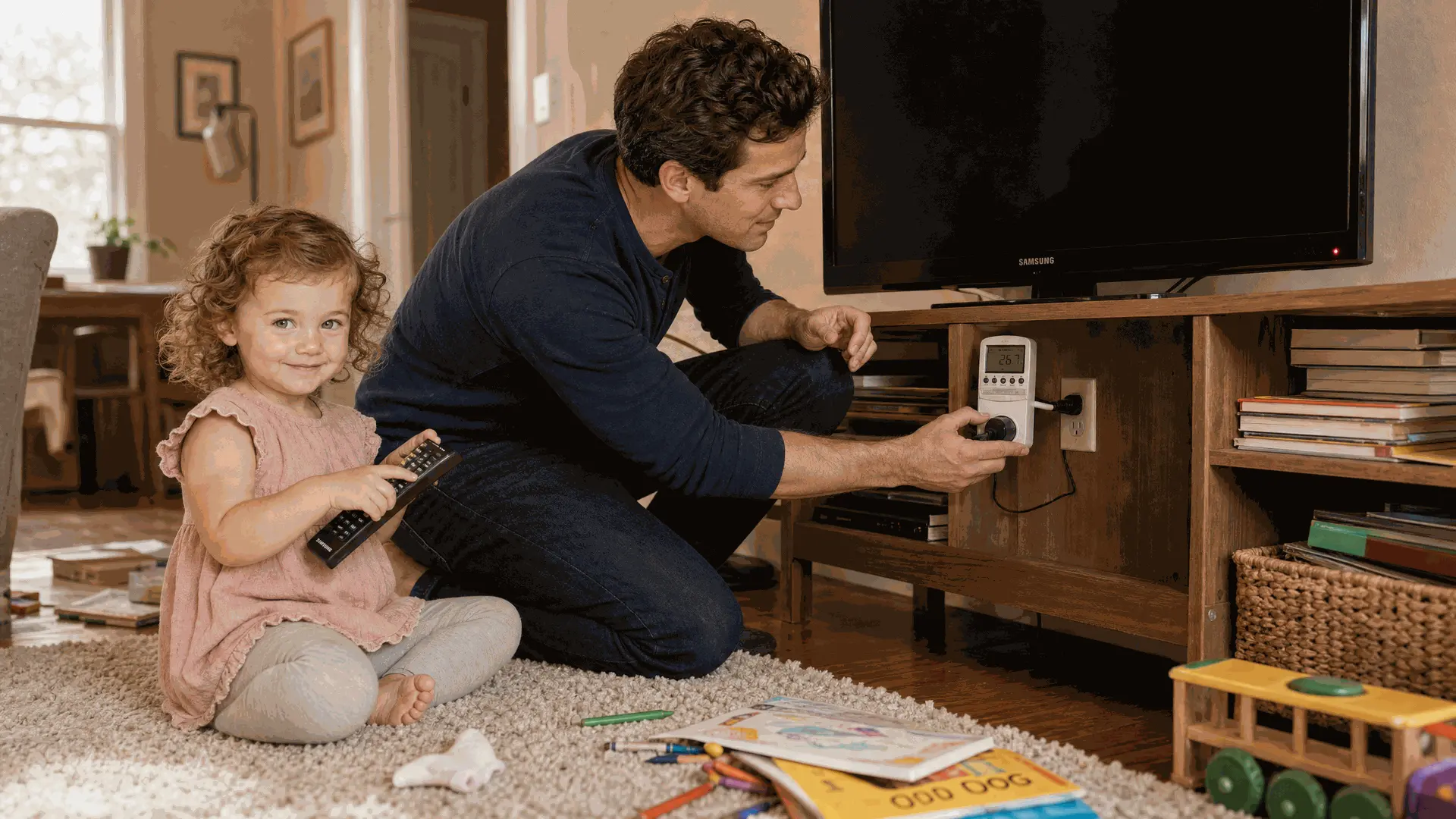
2018 · The Night They Stayed Home
Then came the World Cup.
Venus was staying with her grandmother for a few days. Jack and Rose had originally planned to go out. Dinner. Drinks. Maybe somewhere loud enough that neither of them would have to think about work. They hadn't had much time alone together lately.
But that afternoon, Rose changed her mind. “Why don't we just stay home?” Jack looked at her. “Really?” “Why not?” She pointed at the television. “The game is tonight.” Jack smiled.
The old living room suddenly seemed inadequate. The television worked. The cable box worked. But the sound came from the TV speakers. The room was bright. The curtains were open. The sofa looked like the sofa. Nothing about it felt like an event.
Rose looked around. “This doesn't feel like a World Cup.” Jack laughed. “What exactly is a World Cup supposed to feel like?” She thought about it. “Louder.”
That was all Jack needed to hear. He started shopping. Jack had never planned to become an AV enthusiast. But now he wanted better sound. A proper AV receiver. Better speakers. A subwoofer. Maybe rear speakers. Maybe not.
Then he discovered that once you bought one piece of AV equipment, every other piece suddenly looked slightly inadequate. The receiver needed to be integrated. The source needed to switch automatically. The television needed the right input. The speakers needed the right volume. And suddenly his little TV automation had grown up.
Aha Moment #4
Jack had spent years teaching devices how to obey.
Now he was trying to make them arrive at the same moment.
The first time the system worked, Jack pressed one button. The television came alive. The receiver switched inputs. The speakers came on. The right source appeared. Rose looked around. Then she smiled. “This is better.” Jack nodded. He had been waiting for that.
But something was still wrong. The room was too bright.
When the Room Changed
Jack started with the easiest thing. The lights. At first, just ordinary smart bulbs. Then dimming. Then warmer light. Then cooler light. Then RGB. Then, because Jack was Jack, he eventually found himself reading about DMX at one in the morning.
Rose found him at the kitchen table. “What are you doing?” “Lighting.” “You already have lights.” “I know.” “Then why are you researching more lights?” Jack paused. “Better lights.” Rose stared at him. “You're impossible.” Jack smiled. He probably was.
But the room began changing. The bright overhead lights disappeared. The lamps became warmer. The television became the brightest thing in the room. The lights dimmed when the game started. The room wasn't dark. It was simply no longer competing with the screen.
Jack added another little piece. A scene. He called it: Sport Amusement Time.
Rose hated the name. Jack refused to change it. “It's descriptive,” he said. “It's terrible,” she replied.
But it worked. One button. Television. Receiver. Source. Volume. Lights. Everything happened in the right order.
The scenario was the World Cup. The mood was the feeling Jack remembered from those crowded bars years ago. The scene was what he built in the living room to recreate it.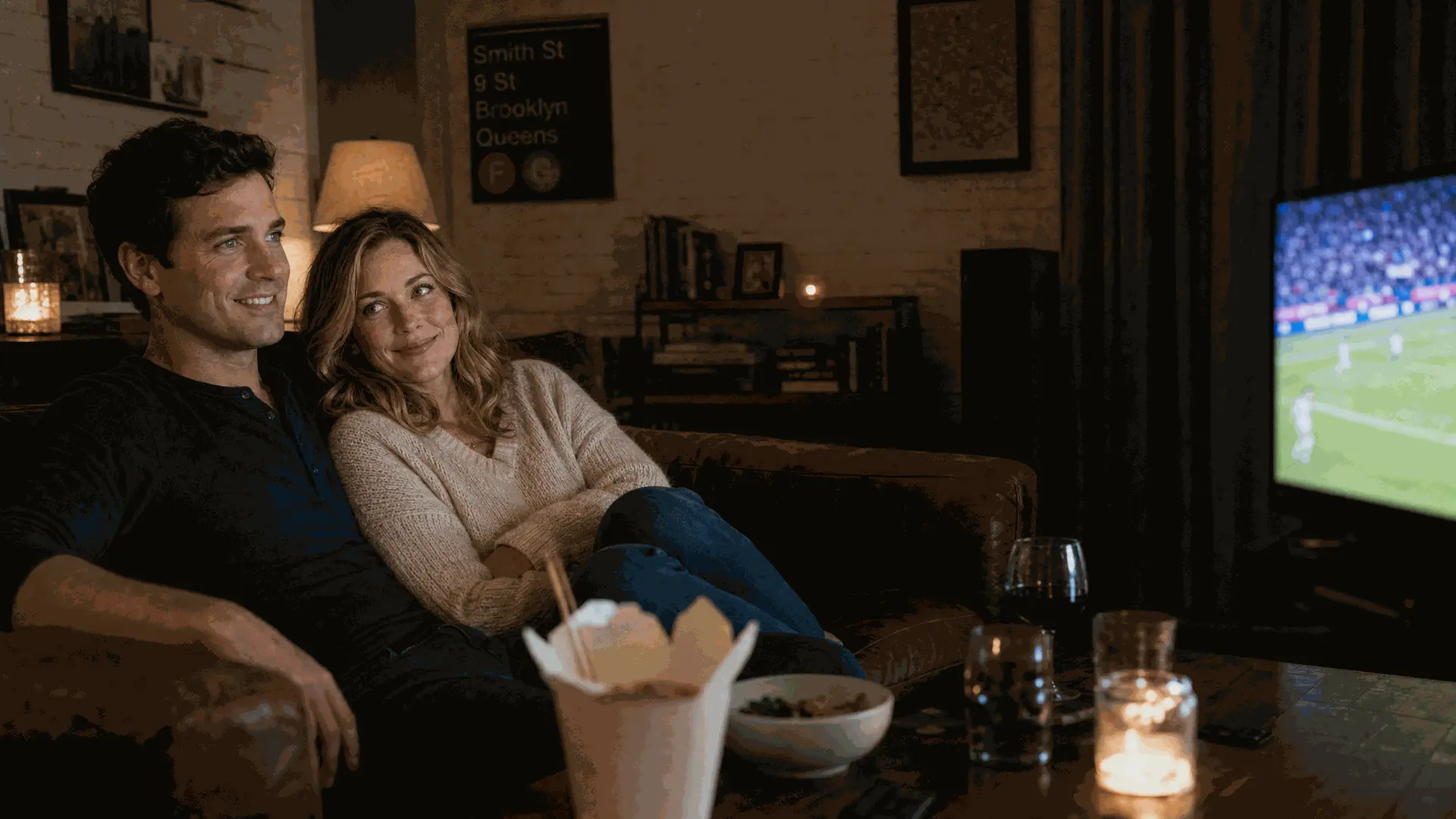
Rose sat down. She looked around. “This is actually nice.” Jack smiled. He had been waiting for her to say that too.
Aha Moment #5
Scenario is what is happening.
Mood is how you want it to feel.
Scene is how the room gets there.
Jack didn't think of it in those terms at the time. He just knew that he wasn't trying to turn on lights. He was trying to recreate a night they remembered.
Venus Time
But Jack and Rose didn't spend every night watching sports. Sometimes the living room belonged to Venus. They watched cartoons together. Not because they were trying to educate her every minute. Because that was what families did. Dad on one side. Mom on the other. Venus in the middle, wrapped in a blanket that was usually too large for her. They watched The Lion King. Toy Story. Frozen. Sometimes the same movie more than once.
Venus asked questions. Why did he do that? Why is he bad? Why did she leave? Why did he come back? Jack and Rose answered as best they could. Nothing profound. Just the small lessons parents pass to children without realizing they are passing them on. Be brave. Don't hurt people. You can make a mistake and still come home.
And because Jack was Jack, he eventually automated the room for her. Softer lights. Curtains closed. A comfortable temperature. The volume turned down. Everything ready before the opening credits.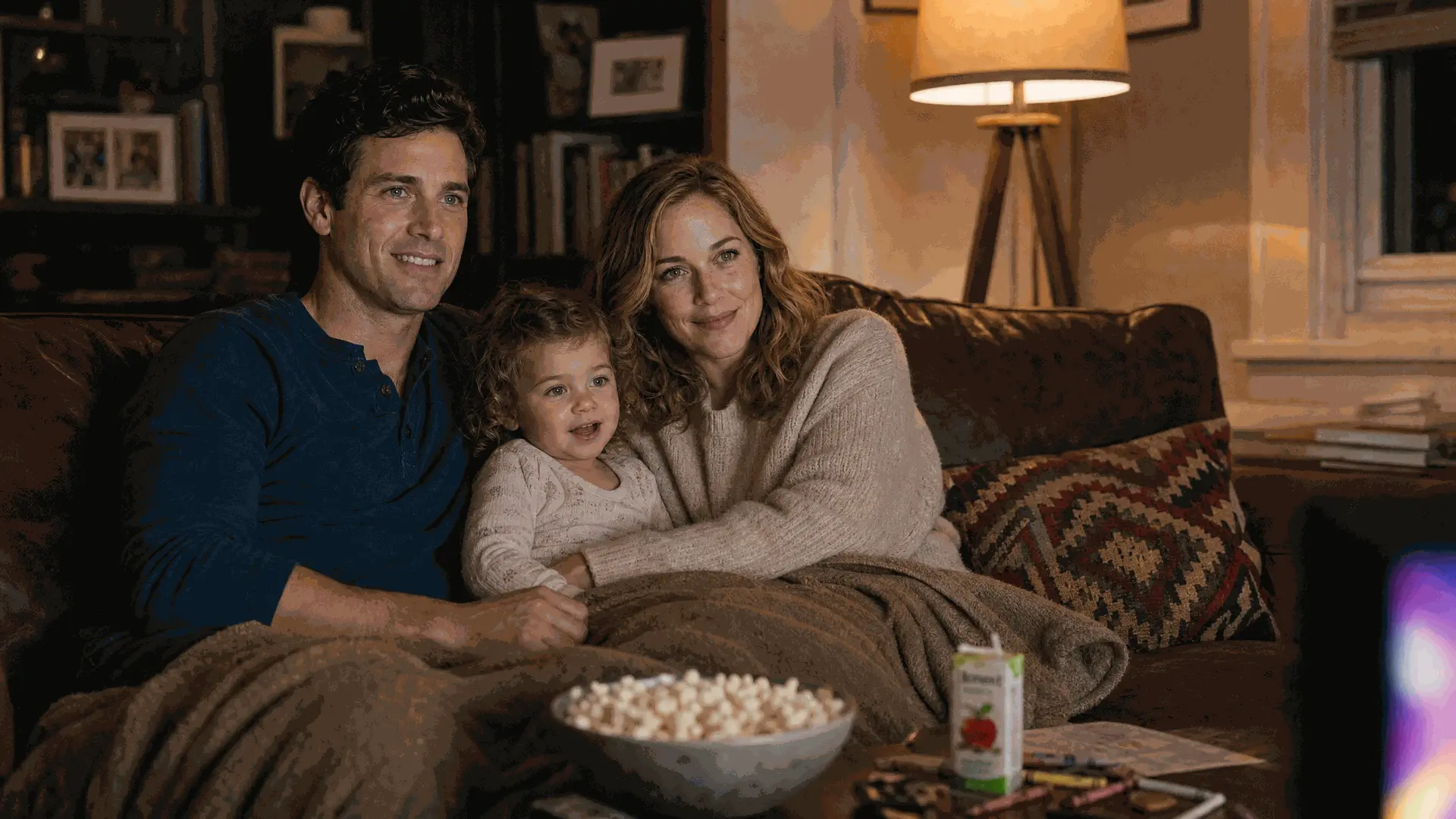
He called the Scene: Venus Time.
That one mattered more than Sport Amusement Time. Because it wasn't about technology. It was about the three of them being together.
Aha Moment #6
Preference is not a device state. It is a human choice attached to a situation.
The temperature was not technically “correct.” It was simply what Venus preferred. Jack had built Sport Amusement Time for the two of them. Venus Time was the first one he built for all three.
Rose Had Her Own Evening
Rose had her own ritual too. Every evening at 8:30, she watched her favorite drama.
Jack already had the Movie Time Scene. What he wanted was to make it happen the same way every night. That repeatable behavior became a routine. He attached a schedule to it: 8:30 PM. Reaching 8:30 became the trigger.
Jack's configuration existed as instructions on his computer. But instructions were only potential. The moment 8:30 arrived, those instructions began running.
That was runtime.
The configuration had existed for years as instructions, files, scenes and routines. But now those instructions were no longer sitting on a screen. They were running.
That was execution.
The television came alive. The receiver switched. The lights dimmed. The system didn't just send commands and walk away. It watched what happened. The plan stopped being a file and became something happening in the room.
Aha Moment #7
Configuration is what you have written. Runtime is what is actually happening.
Automation isn't always about pressing fewer buttons.
Sometimes it means pressing none.
Jack made another Scene. He called it Movie Time. Then he added a schedule. 8:30. Every evening. The clock reached the right time. The room changed. That was the first time Jack began to understand that automation didn't necessarily mean pressing fewer buttons. Sometimes it meant not pressing anything at all. A trigger started something. A schedule was simply a trigger tied to time.
Again, Jack didn't think of these as technical concepts. They were just things his family needed.
2019 · Too Many Little Boxes
By now, Jack had a problem. The system worked. Mostly. But there were too many things. The Samsung had commands. The Marantz had commands. The Apple TV had commands. The lights had commands. The curtains had commands. The BroadLink had learned half the living room. And Jack was starting to forget what he had called everything.
So he did what any programmer who has made a mess does eventually. He created a spreadsheet. Then another sheet. Then IDs. Then categories. Then tags. Then a little search tool. It began to look something like this: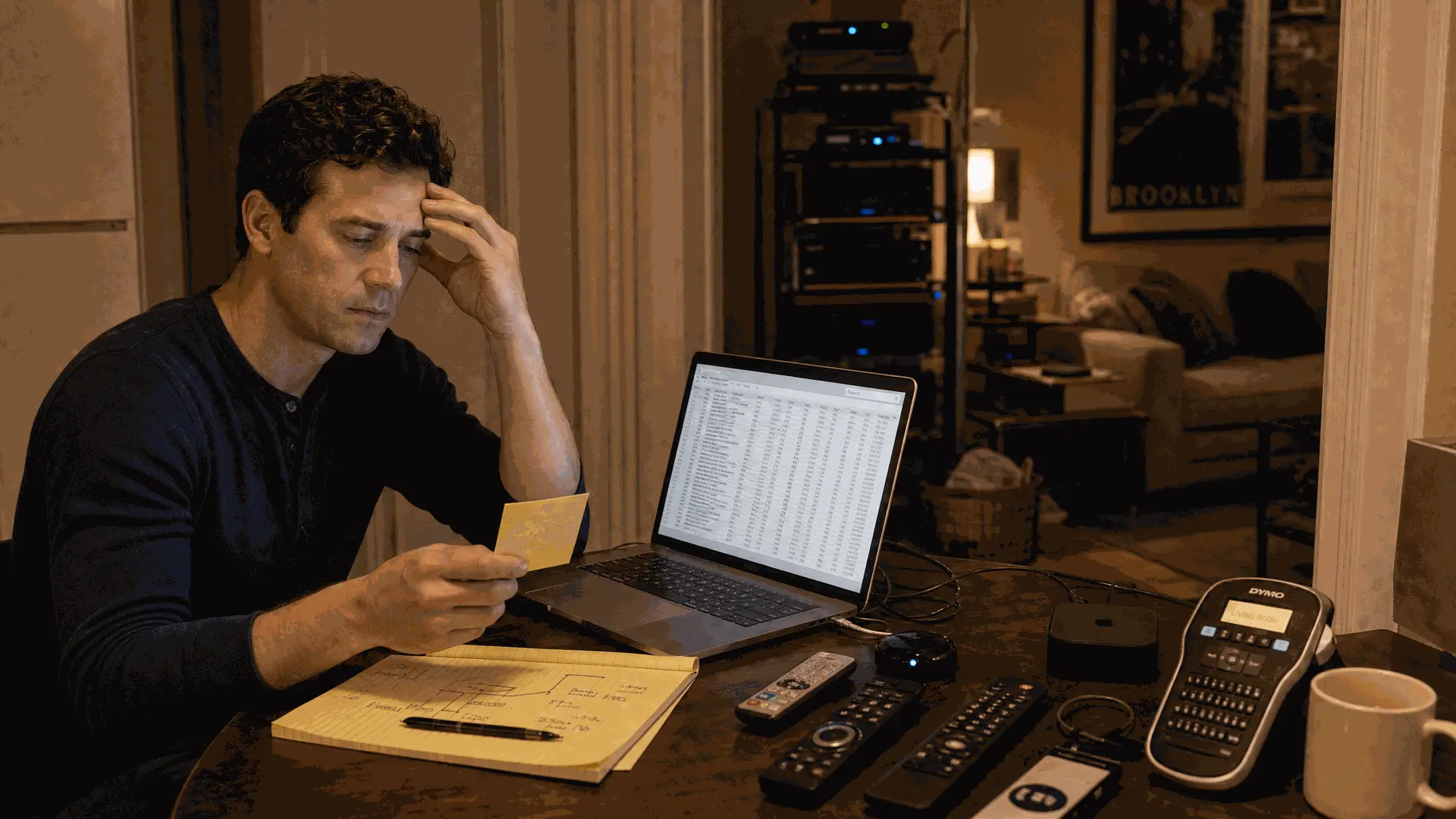
Device
Brand
Model
Capability
Command
Protocol
State
Tags
He could type TV + power or Marantz + Blu-ray or Venus + movie and find what he needed. It wasn't elegant. But it worked. The spreadsheet eventually passed three hundred rows. Jack hated it. He also couldn't live without it.
Aha Moment #8
When there are too many things to remember, you stop adding commands and start building knowledge around them.
Jack wasn't storing commands anymore. He was building an index so he could find them. Brand. Model. Protocol. Capability. State. Tags. Those little labels became metadata—information about the thing, rather than the thing itself. He had accidentally built an index. And because every command needed a name, a category, and a relationship to something else, he was slowly building a tiny database of his home. Not because he had decided to build one. Because there were too many things to remember.
2020 · When the World Came Home
Then the world stopped. The pandemic changed the meaning of the living room. The office moved home. School moved home. Restaurants moved to takeout. The outside world became something you watched through glass. And the living room suddenly had to do everything.
Jack's old television was no longer enough. If everyone was going to spend this much time at home, he wanted the room to work properly. So he bought more AV equipment. A better receiver. Better speakers. Streaming devices. More lighting. More networking gear. Cameras. Air-quality sensors. Temperature. Humidity. CO₂. Presence sensors. Eventually, there was a proper rack.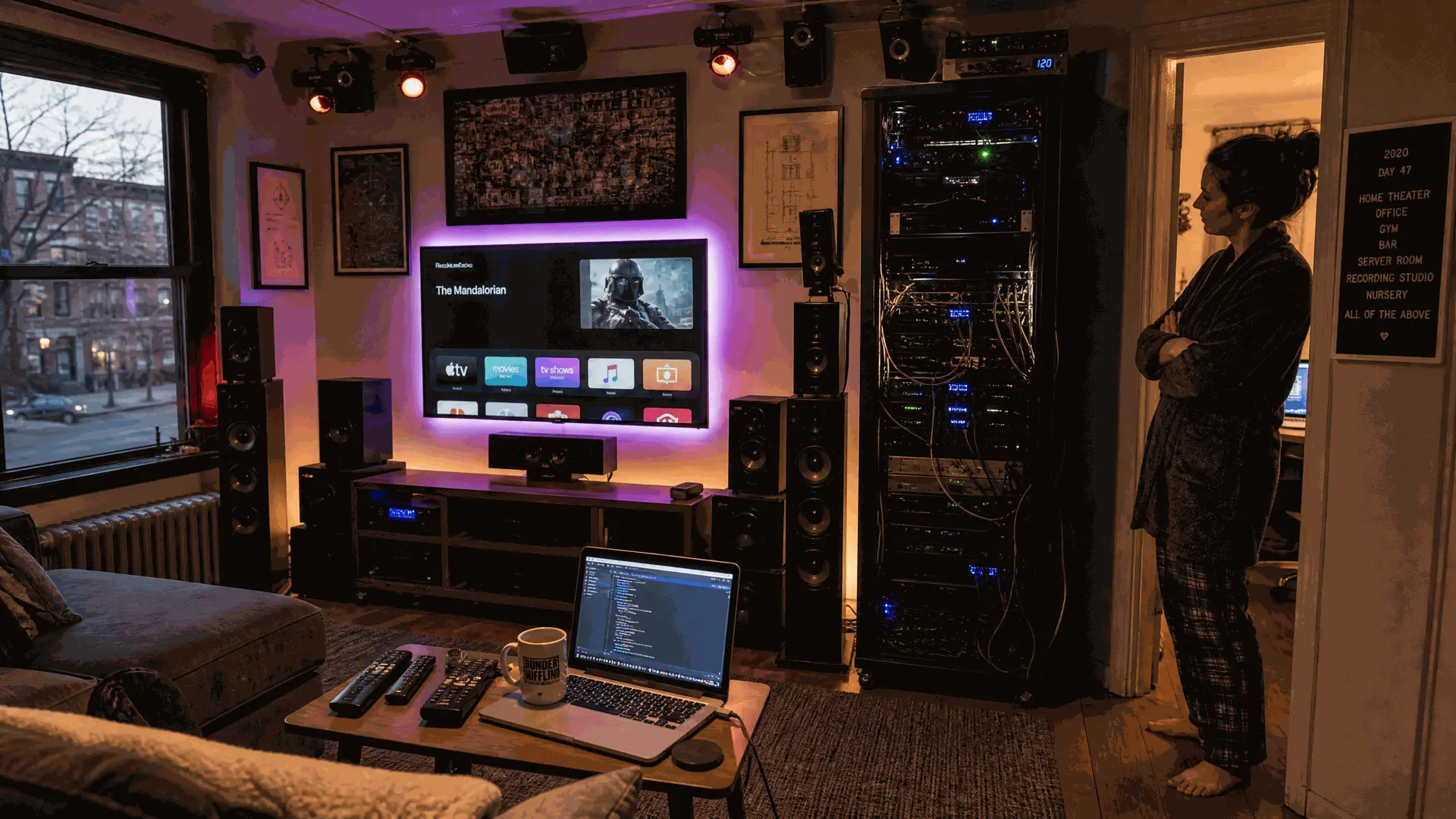
Rose stood in front of it one afternoon. She looked at the blinking lights. Then at Jack. “When did our living room become a server room?” Jack laughed. He didn't have a good answer. But there was something strangely comforting about it. Outside, everything had become uncertain. Inside, Jack could still make something work.
And the more equipment he added, the more obvious another problem became. Power. Not just ON or OFF. Which thing should turn on first?
Jack had been writing different sequences in software for different scenes. Now he found a little rack box that could handle one very specific part of that problem in hardware: power order. The sequence was the recipe. The sequencer was the hardware that enforced the order.
Aha Moment #9
Sometimes automation isn't about adding intelligence.
It's about putting the right order in the right place.
Jack had been writing sequences in software for years. Now he found a little rack box that could do part of that job in hardware. A sequencer. The sequence was the recipe. The sequencer was the thing that executed the power order. Rose thought it was ridiculous. Jack thought it was brilliant. Both were probably right.
2021 · The Remote That Finally Made Sense
Then Jack found Harmony.
For a while, it felt like someone had finally understood what he had been trying to do.
Jack had spent years learning the names of devices. Harmony asked him to forget them. That was abstraction. The devices were still there. The commands were still there. The sequences were still there. Harmony simply moved that complexity behind a human word: Watch Movie.
That was what an Activity really was: a human-facing abstraction over a machine-facing sequence.
An Activity was a human-facing action hiding a machine-facing sequence. A Scene described what the room should become. An Activity described what the person was doing.
Aha Moment #10
Harmony didn't make Jack's house smarter. It made Jack's complexity disappear.
Jack loved it. Because Harmony did something his spreadsheet never could. It hid the machinery. It let a human think about what they were doing, instead of which devices were involved. For a while, Jack stopped writing things. He just used the remote.
Then Logitech announced it would stop manufacturing Harmony remotes in 2021, while continuing support for existing users. Jack stared at the announcement. He had known this day might come. Still, it felt strangely personal. He looked at the Harmony remote on the table. Then at the rack. Then at his spreadsheet, still sitting on the laptop.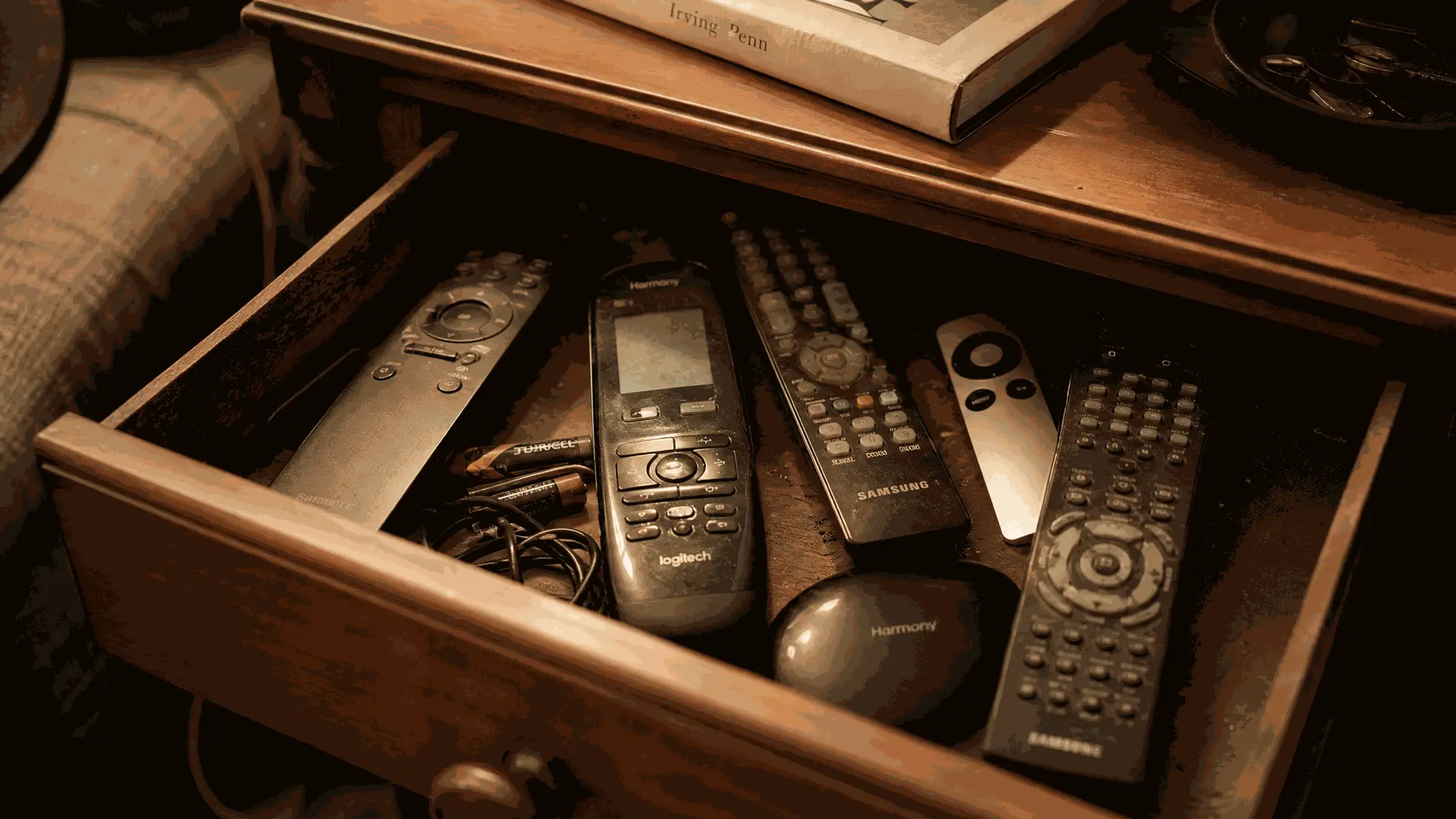
Rose looked over. “So?” Jack sighed. “So I guess I'm going back to being an idiot.”
2022 · The Thing He Had Ignored
Jack had heard of Home Assistant before. Probably from a forum. Maybe Reddit. Maybe one of those YouTube videos he watched when he was trying to solve something else. He had never really needed it. He already had his own system. His spreadsheet. His scripts. His Harmony. His collection of boxes.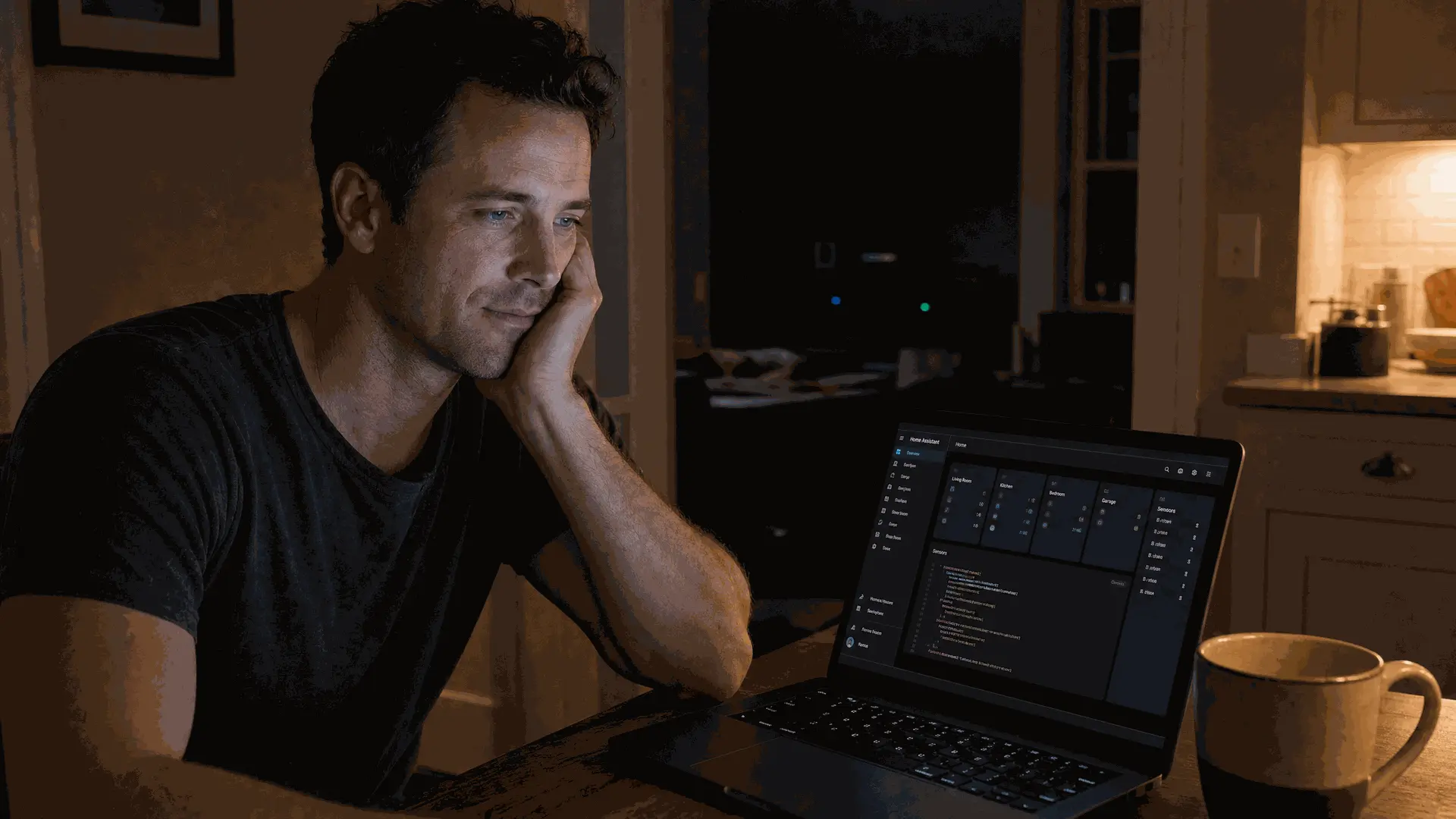
Then Harmony stopped being part of the future. So Jack went looking again.
Jack wasn't looking for a community. He was looking for a place to put all the things he had already built. Home Assistant happened to be the place.
He installed it. And for the first time, Jack saw something that looked less like a remote and more like the thing he had been accidentally building all along. Devices. States. Automations. Scenes. Entities. Integrations. History. A place where everything could finally exist together.
Aha Moment #11
Harmony had given him usability without freedom.
Home Assistant gave him freedom without usability.
Jack leaned back. “So I'm not the only idiot doing this.” He laughed. The room was empty. But somehow, it didn't feel lonely.
Jack Becomes an HA Expert
He didn't fall in love with Home Assistant. He became good at it because he'd already broken everything once. Jack had a strange advantage over newer users. He had made most of their mistakes years earlier—just without the fancy name.
YAML. Integrations. Entities. Automations. Scenes. Templates. History. Scripts. He learned them all. Not because he was passionate about Home Assistant. Because he had already fallen into most of the holes. And when other people in the community asked, “Why doesn't my automation work?” Jack could usually answer: “Because you're assuming the state is already what you think it is.”
That was his superpower. He had made every mistake already.
2023 · Context
By then, Jack had enough sensors to know things he had never thought about before. Temperature. Humidity. Presence. Motion. Light. Time. What was playing. Which room was occupied. Which devices were awake.
Jack began noticing that the same automation behaved differently depending on what was happening around it. Time mattered. Temperature mattered. Presence mattered. What was playing mattered. Even who was in the room mattered.
Scenario described the situation. Context described the information that made that situation meaningful.
“Movie night” was the scenario.
The fact that it was raining, Venus was home, Rose was asleep, the room was already warm and the curtains were closed—that was context.
Aha Moment #12
The scene was fixed. The scenario was alive. The context kept changing.
A scenario was the wider situation around the family. The time. The weather. Who was home. What they were doing. What had happened before. A scene was fixed. A scenario was alive. That word stuck with Jack. Because context changed everything.
“Turn on the lights” meant one thing at 6 PM. Another thing at midnight. One thing when Venus was watching television. Another when Rose was reading. Another when everyone was asleep. The command hadn't changed. The context had. Jack realized that this was why some of his old automations felt stupid. They knew the instruction. They didn't know the situation.
Memory
Then came another problem. The house could remember events. But did it understand what they meant?
An event tells the house what happened. A preference tells it what someone tends to want. Memory is what lets the system carry that knowledge forward.
Aha Moment #13
A routine is repetition.
A memory is understanding what that repetition means.
Memory wasn't just: This happened. It was: This tends to happen when these people are together, at this time, in this situation. Rose always lowered the temperature after dinner. Venus dimmed the lights when she watched movies. Jack never noticed either of them doing it. The house could remember every event. But Jack began wondering whether those events meant anything. Maybe memory wasn't just remembering what happened. Maybe it was remembering what usually mattered.
One night, Rose lowered the temperature manually. The system noticed.
That was feedback.
If the same correction happened again and again under similar conditions, it could become something more than history.
It could become learning.
That was much harder and much more interesting.
2024 · The Three of Them
One Saturday evening, the family sat together again. Venus was older now. She wasn't the little girl who hid the remote anymore. She had her own tastes. Her own music. Her own opinions. Her own way of using the room. Jack looked at her and realized that the house had been changing because she had been changing. The Scene he had built years ago for a little girl watching cartoons was no longer enough. Neither was Rose's Movie Time. Neither was Jack's Sport Amusement Time.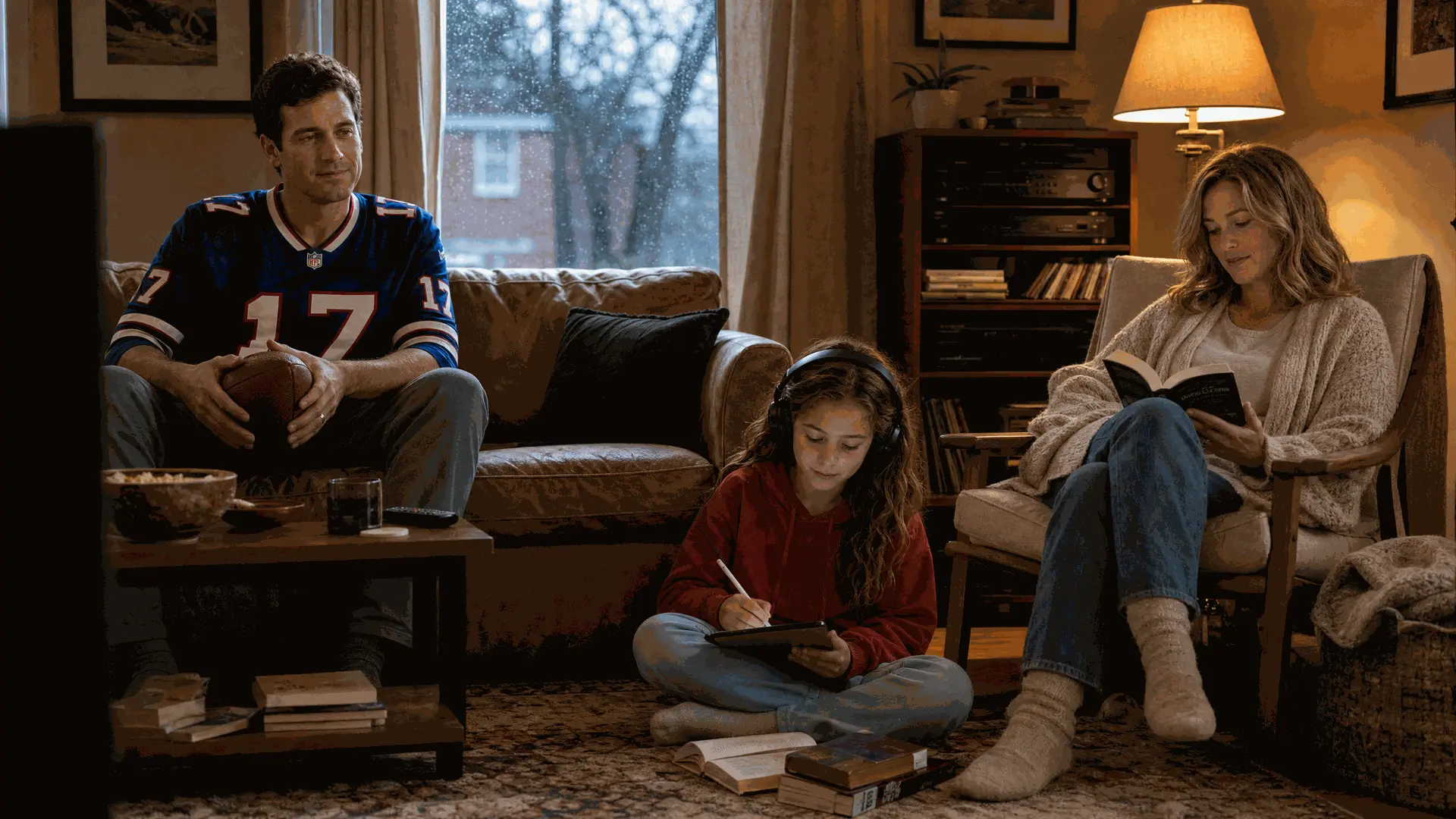
Aha Moment #14
A home doesn't become outdated only because its devices change.
It becomes outdated because its people do.
Jack had built a perfect Scene for a four-year-old. He had forgotten that four-year-olds don't stay four. Neither had the house. The house had three users. But it had never really had a way for those three people to share one experience. That was the next problem. Not automation. Not control. Interface.
August 2025 · The Post
It was a Tuesday night. Jack was scrolling through one of the Home Assistant communities. He wasn't really shopping. He was looking for ideas. Then he saw a post. A few engineers building a physical interface for Home Assistant. The name was Astrion.
It didn't look like another polished appliance from a giant company. It looked like something people were still building. Still discussing. Still changing. He didn't stop because it looked beautiful. He stopped because the discussion underneath it sounded familiar. People were talking about buttons. About voice. About Home Assistant. About what a remote should become when a home was no longer just a collection of devices.
Jack read for a while. Then he ordered one. Then he waited. Three months. Rose asked twice. Venus forgot about it. Jack didn't, because the question was no longer: Can this control my TV? He had solved that problem years ago. The question was: Can three people use the same house without having to learn the house's language?
November 2025 · The Box
The box arrived on a Thursday. Jack opened it at the kitchen table. It looked like a remote. But it wasn't really just a remote. There were physical buttons. A screen. Home Assistant underneath. Voice. Scenes. And something else Jack recognized immediately.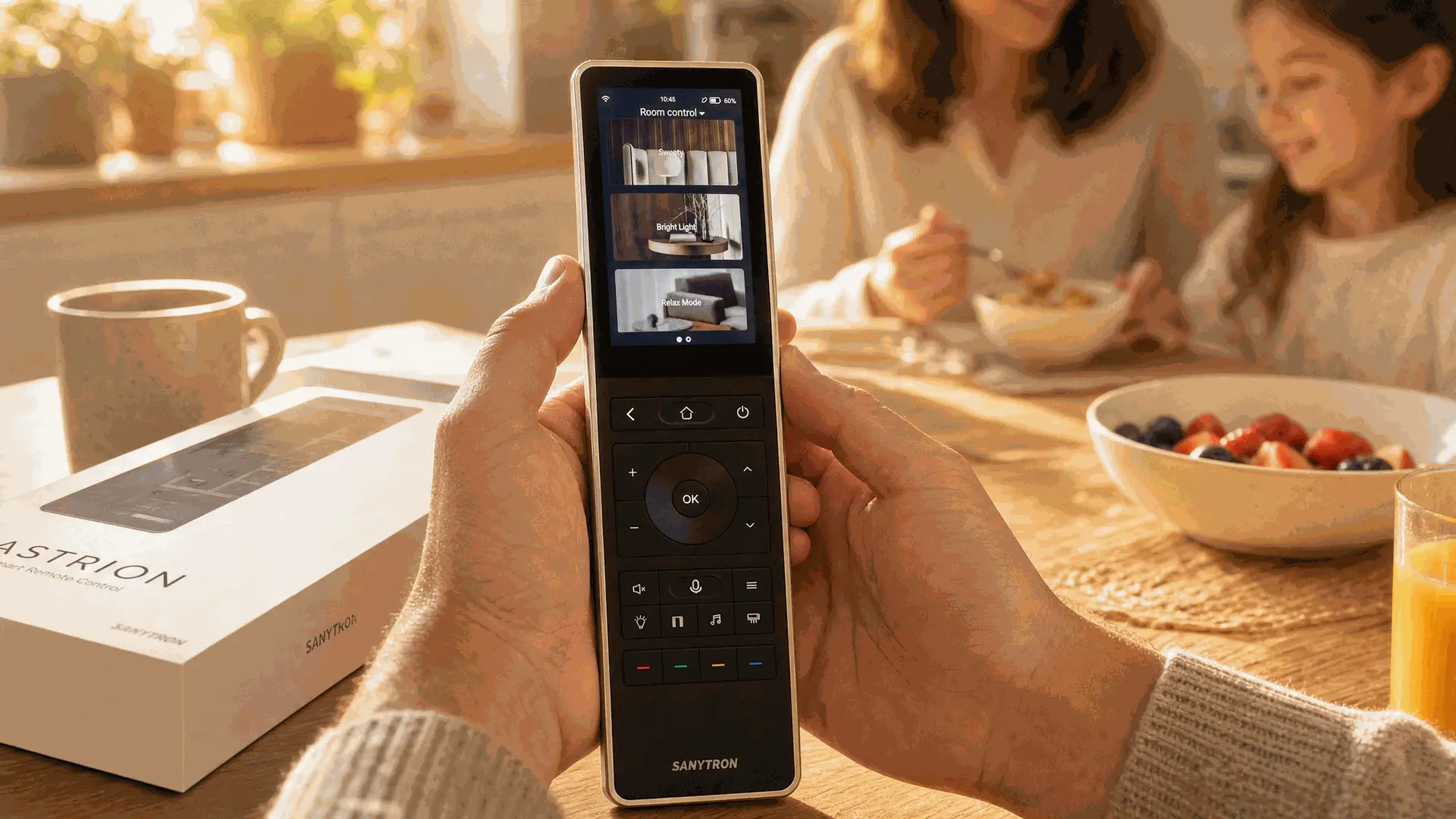
Possibility. It wasn't perfect. There were bugs. Things behaved strangely. Jack posted questions. Someone answered. Another user suggested something. A firmware update arrived. Jack installed it. Another one came later. The interface changed again. And Jack began to realize that this wasn't just a product he had bought. It was something people were building together.
Aha Moment #15
Jack had spent ten years making the house easier for himself.
For the first time, he had something that could make the house easier for everyone.
That mattered. Because a family home isn't owned by one person. Why should its interface be?
2026 · Five Words
One evening in 2026, it was raining. Rose was on the sofa. Venus was beside her. Jack walked into the room. The television was asleep. The curtains were already closed. The room was a little warm. Jack didn't pick up a remote. He didn't open an app. He just said:
“I want to watch a movie.”
Five words.
What Happened Next
The old Jack would have translated those five words into a checklist. TV on. Receiver on. Blu-ray. HDMI. Lights. Curtains. Air conditioning. Volume. Maybe ten commands. Maybe twenty.
The new system didn't start with the devices. It started with the request. What did Jack mean? Who was there? What was the room like? What had happened recently? What did they normally prefer? What could the house actually do?
Jack had spent ten years teaching machines how to execute instructions. Now the interesting part was teaching them how to understand what the instruction was for.
The Agent
Jack had spent years building automations. An automation waited for its trigger and followed its instructions.
This was different. The system could look at what Jack meant, what was happening around him, what it already knew, and what the house was capable of doing. It could decide what needed to happen next. Jack later learned that a system like that had another name:
Agent.
An agent didn't simply execute a script. It worked toward an outcome.
Automation follows a path.
An agent chooses a path.
The Invisible Work
Behind the five words, the house had to figure out where the request belonged. Something had to receive it. Something had to decide what needed to happen. Something had to gather information from different parts of the house. Something had to match what Jack wanted with what the devices were capable of doing.
Jack never saw any of this. He didn't need to. Jack eventually learned that people had names for those jobs.
The dispatcher knew where the request belonged. The aggregator knew what the house looked like. The orchestrator knew how to make several systems move together. And the agent was the thing trying to decide what should happen at all.
Jack smiled. The names sounded impressive. The problems didn't. He had been solving versions of them for years. He just hadn't known the names.
Capability Is Not Enough
The television could turn on. The receiver could change inputs. The lights could dim. The air conditioner could cool the room. Those were capabilities.
But “prepare the room for a movie” wasn't a capability of any single device. It was a skill built from several capabilities. And suddenly Jack understood something that had been hiding inside his entire decade of tinkering.
A capability belongs to a device.
A skill belongs to the system.
The devices didn't need to understand one another. The system needed to understand what Jack was trying to accomplish. That was the difference.
Runtime & Execution
The plan was no longer being designed. It was in runtime. The commands were being executed. Execution was no longer a diagram on Jack's laptop. It was happening in the physical world.
The television came to life. The receiver switched. The lights dimmed. The room settled.
Feedback & State
And then, it was done. The system knew the television had turned on because the power meter told it so. It knew the receiver had switched because it could see the state change. It knew the lights had dimmed because the bulbs reported back. Feedback confirmed the new state. The loop was closed. Jack watched the room for a moment. Nothing had happened that he couldn't have done himself ten years earlier. He just no longer had to.
The Living Room That Grew Up With Us
Jack had started with a button. Then a command. Then a sequence. Then timing. Then automation. Then state and feedback. Scenes. Routines. Activities. Context. Memory. Skills. And eventually, intent. Behind those words were years of little mistakes.
Command is what you tell a device.
Intent is what you want to accomplish.
But none of those words came first. The problems came first. The family came first. Life came first.
Jack didn't wake up one morning and decide to invent a new interface. He just wanted the television to turn on. He wanted Rose to enjoy a movie without touching three remotes. He wanted Venus to have a room that felt like hers. He wanted his family to spend less time fighting machines and more time together. The technology followed. One little problem at a time.
Jack never thought he was part of the history of home automation. He was just trying to make Tuesday nights easier. But perhaps that is how technology has always moved forward. It isn't really a history of switches. Or protocols. Or remotes. Or screens.
It is the history of a very ordinary human wish:
I want my home to understand how we live.
For decades, we taught machines commands. Then sequences. Then states. Then scenes. Then activities. Then context. And now we're beginning to ask something different. Not: What button should I press? But: What am I trying to do?
Maybe that is the real journey. Not from remote control to artificial intelligence. But from controlling a house to living with it. And perhaps the best interface for a family isn't the one that knows Jack best. Or Rose best. Or Venus best. It is the one that gives all three of them a place in the same room. A shared interface. Something that grows with them. Something they can teach. Something they can shape together. Something that doesn't ask a family to learn how the house works—but gradually learns how the family lives.
Jack didn't need another remote. Neither did Rose. Venus certainly didn't. They just needed a way to say what they meant. And sometimes, they didn't even need to say that. The room was already there. The family was already together. The movie was about to begin.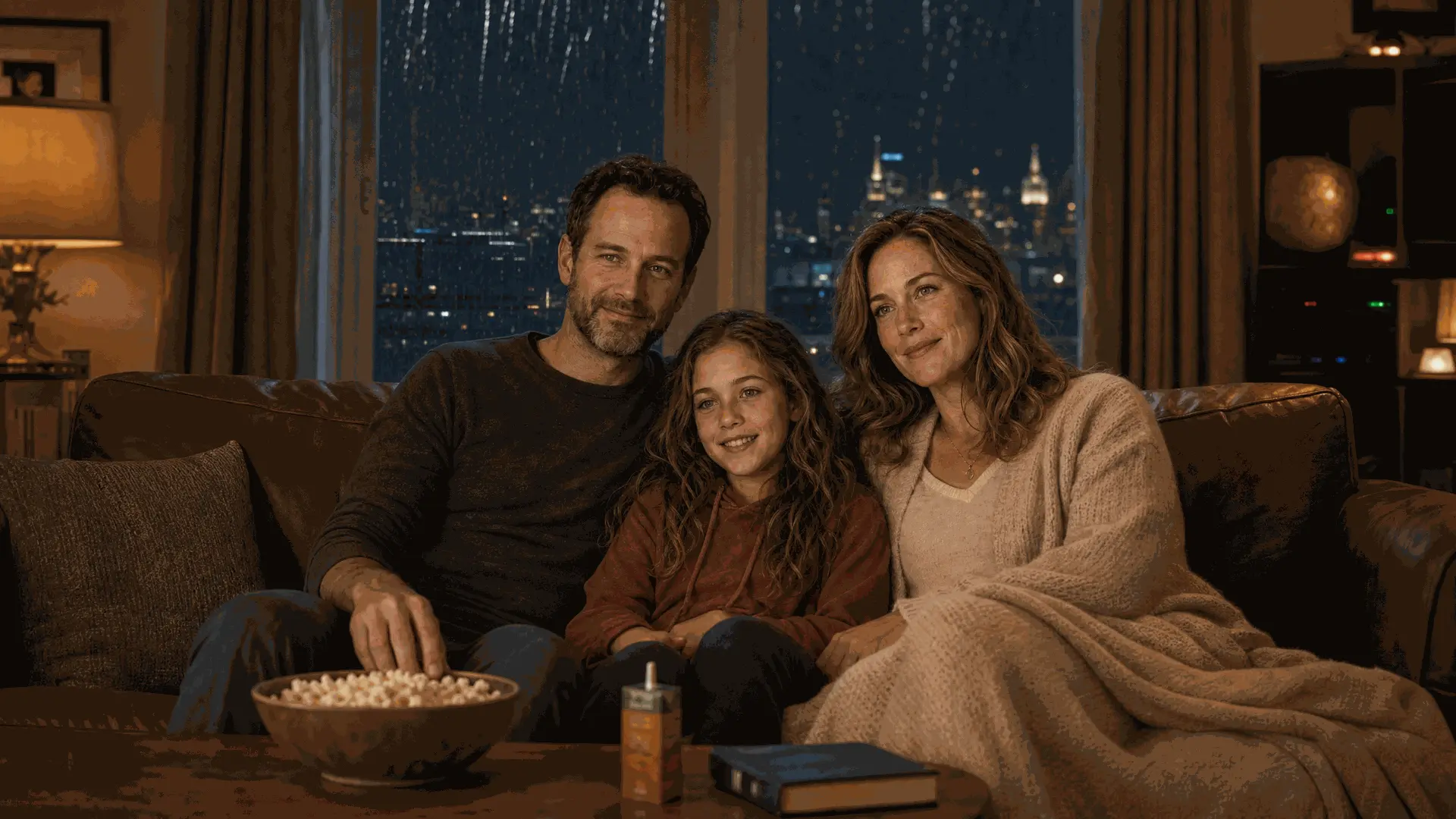
The Living Room That Grew Up With Us