
AI is changing how we interact with computers, but that doesn't mean physical interfaces are disappearing. Buttons, knobs, screens, sensors, voice, and AI each serve a different form of human intent.
Every few years, someone announces the end of interfaces. The keyboard was supposed to disappear. Then the mouse. Touch would replace buttons. Voice would replace touch. And now AI is supposed to finish the job.
It's a compelling story. History keeps telling a different one.
Every major computing shift was supposed to simplify interaction. Instead, each one added new ways of talking to machines. The mouse didn't kill the keyboard. Touch didn't kill the mouse. Voice won't kill touch. They accumulate. Each becomes another language.
I used to see that as failure. Now I think it's something else entirely.
Because people don't have only one way of expressing intention.
When you want to scrub through a video timeline, you reach for a knob. When you want to confirm a critical action, you press a physical button. When you want to browse a library, you scroll. You don't dictate the experience. You choose the tool that matches the thought.
These aren't merely preferences. They're different intentions.
A knob is not a button with infinite steps. It's a different sentence.
A button says: "Do this."
A knob says: "More." Or: "Less."
A touchscreen says: "Let me choose."
A sensor says: "You don't have to ask."
A voice command says: "I'm busy—do it for me."
Interfaces stop being hardware. They become grammar.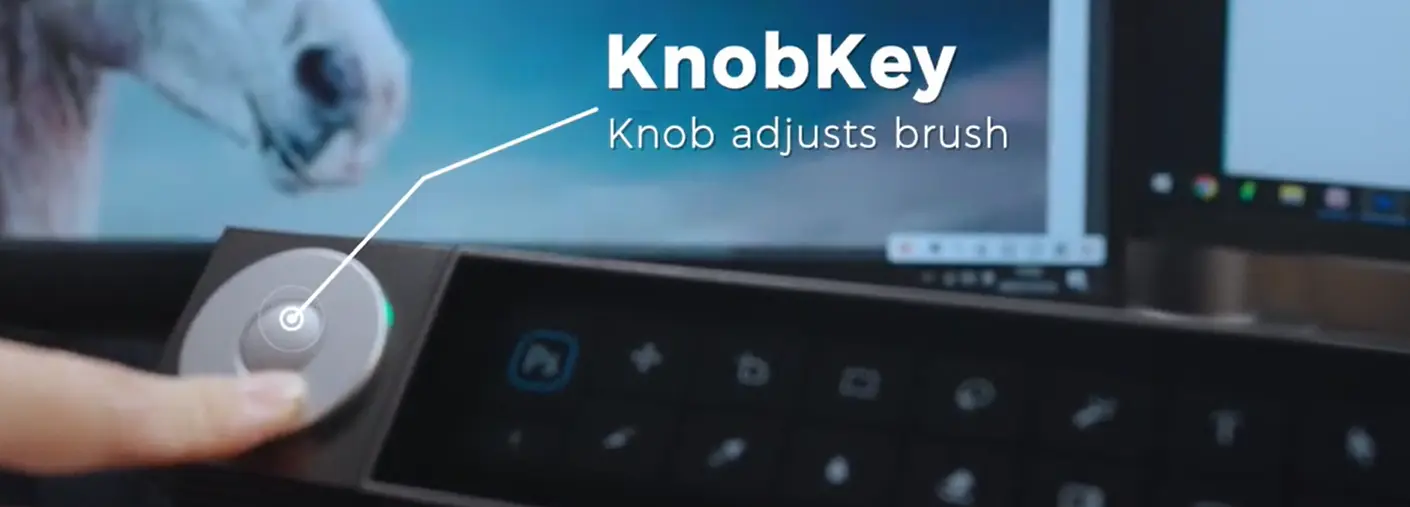
That realization changed how we think about UltraBARX. We stopped asking, "What device should we build?" and started asking a more useful question: what kinds of intention aren't today's interfaces very good at expressing?
Continuous adjustment. Explicit confirmation. Environmental awareness. Presence. Context switching.
The answer kept pointing toward a modular system. Not because modularity is fashionable, but because human intention isn't uniform.
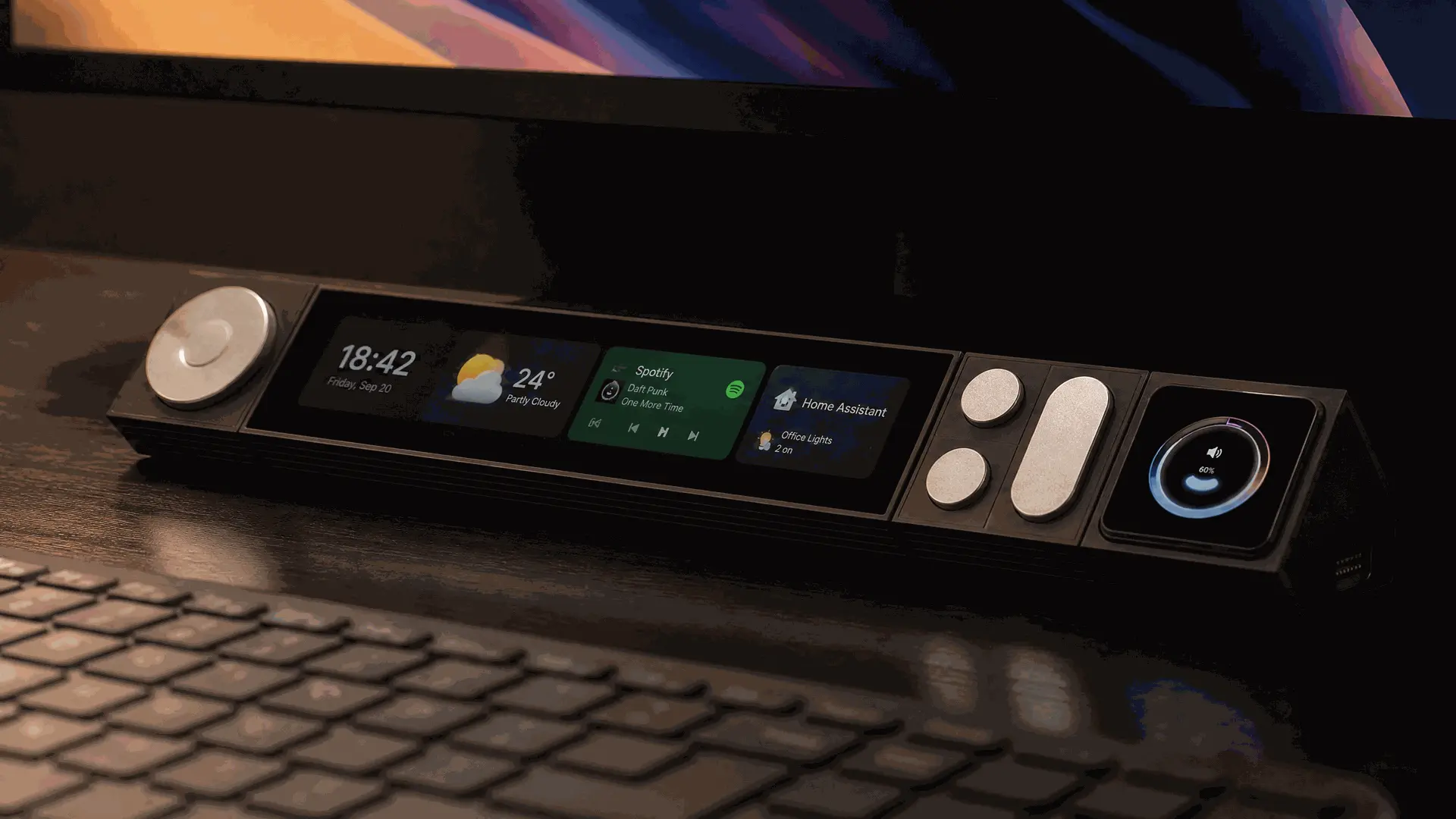
So we built a physical vocabulary, not a single device. Knobs for fluid, graduated control—the kind of tactile adjustment no voice command or slider can replicate. Buttons for decisive action—a deliberate press that leaves no ambiguity. Sensors for ambient awareness, quietly providing context without requiring you to ask. Screens for browsing and selection.
None of these replaces the others. Each speaks a different dialect of intention. Together, they form a language.
What people miss about the early internet isn't just the absence of algorithms. It's that you could shape your own experience—build something personal, choose your own tools, wander without being guided. UltraBARX is an attempt to bring a little of that feeling to the physical desktop. Not a predetermined interface designed by a committee, but a set of building blocks you assemble into something that feels unmistakably yours.
The goal isn't to make interfaces invisible. The goal is to make them appropriate.
A button you can find in the dark. A knob with just the right amount of resistance. A screen that appears when you need to choose, and gets out of the way when you don't.
Perhaps the future of AI isn't one perfect interface. It's many interfaces, working together, each speaking a different dialect of human intention.
We're only beginning to learn that language.
The Myth of the Invisible Interface