
At Sanytron, we spend a lot of time talking with homeowners, DIY enthusiasts, and professional integrators. One question comes up surprisingly often: "Should I choose Home Assistant or Control4?"
The answer is rarely as simple as comparing feature lists. And we should know — we've built products for both worlds. We understand why professional ecosystems work, and why open ecosystems are changing the market.
A recent conversation with a friend started with exactly this question. He just bought a new house — three floors, open-plan living area, a dedicated home theater in the basement. His builder had recommended a Control4 integrator who quoted him $15,000 for a whole-home system. Meanwhile, his brother-in-law, a software engineer, had been sending him screenshots of his Home Assistant dashboard and insisting it was the only way to go.
"Which one should I pick?" he asked. "I don't want to make a $15,000 mistake."
We talked for an hour. And somewhere in that conversation, I realized the answer wasn't about which system was "better." It was about something much more personal: how much control he actually wanted, and what he was willing to trade for it.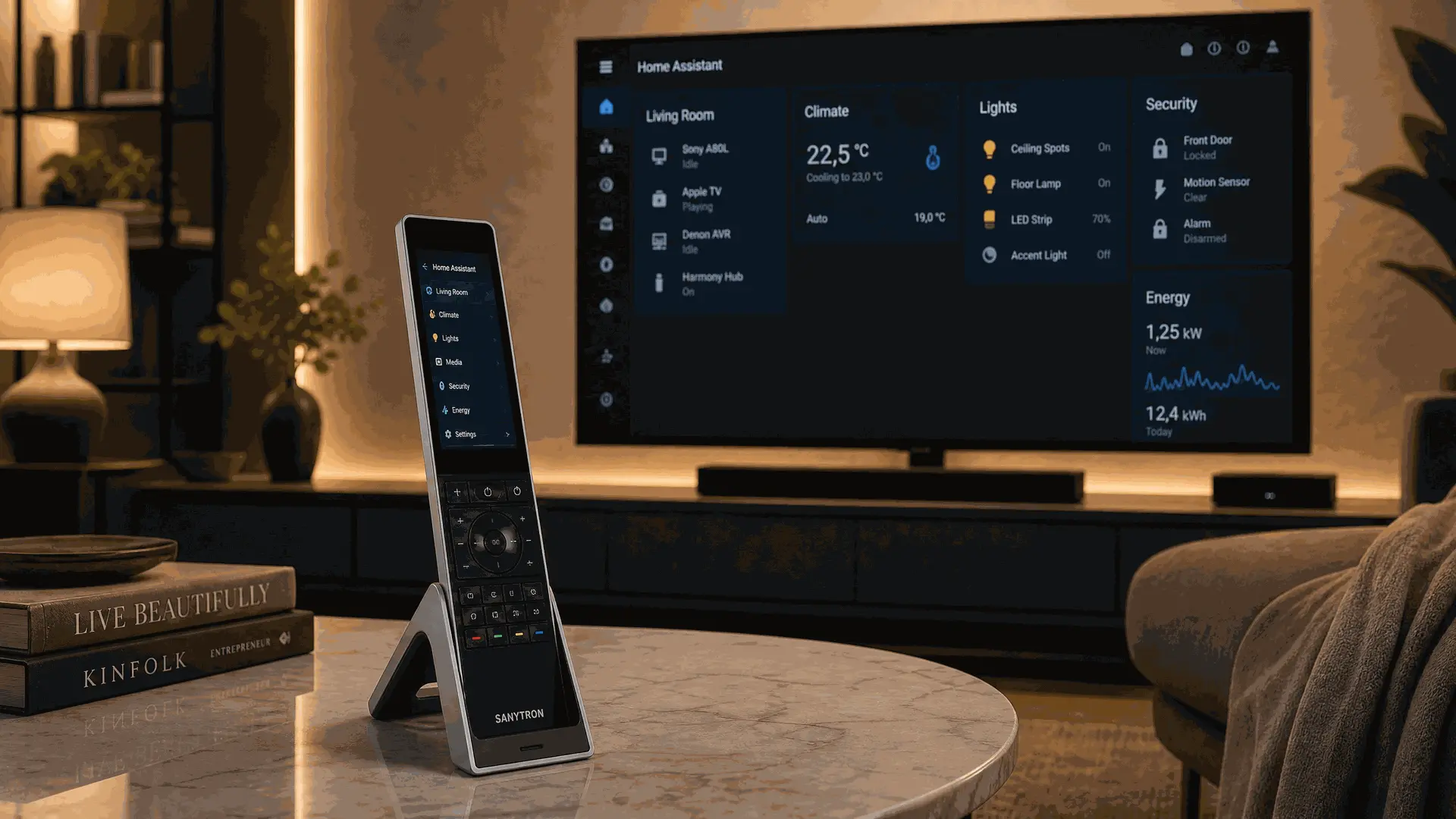
What We Learned Building for Both Worlds
Before Home Assistant became the center of our development efforts, we spent years building products and drivers for professional control systems. We developed Control4 drivers. We built remote controls and control panels designed for dealer-installed ecosystems. We worked within the tightly controlled environments that professional integrators rely on every day.
Those experiences taught us something important. Professional platforms like Control4 excel at delivering polished, reliable experiences — the kind where everything is tested, certified, and guaranteed to work together. But they achieve this through carefully managed ecosystems.
Innovation happens at the pace the platform owner decides, and adding support for a new device or protocol can take months.
Closed ecosystems optimize for consistency. Open ecosystems optimize for possibility.
Home Assistant takes almost the opposite approach. Its openness allows the community to innovate at a pace that closed platforms simply cannot match. When a new protocol emerges or an obscure device needs integration, someone in the community builds it — often within weeks. The trade-off, of course, is that this open ecosystem requires more from the person using it. Things don't always work perfectly out of the box. You need to be comfortable reading documentation, editing configuration files, and occasionally troubleshooting why an automation didn't fire the way you expected.
Neither approach is wrong. They're just built for different kinds of people — and recognizing which kind you are is the key to making the right choice.
Two Philosophies, One Goal
Control4 was built for professionals. It assumes that the best smart home is one that's designed, installed, and maintained by someone who does this for a living. The interface is polished. The hardware is tested and certified. The interface is polished. The hardware is tested and certified, and the system is designed around a controlled ecosystem where the integrator manages how everything works together. When something goes wrong, you call your integrator.
For certain people, this is worth every dollar. Busy professionals who don't want a second hobby. Families who need a system that anyone can use without training. Homeowners who want their property to feel luxurious and complete, not like an ongoing experiment. In these situations, Control4 delivers something that's genuinely hard to replicate: peace of mind.
But there are trade-offs. The hardware is expensive. Adding a new device can mean going back to your integrator, especially when the device requires new programming or driver work. Customization beyond what the integrator configured is limited. You're buying into an ecosystem where the platform owner decides what's supported and when.
Home Assistant was built by the community. It runs on almost anything. It connects to thousands of different products from hundreds of manufacturers. It gives you the freedom to build exactly the smart home you want, using whatever devices and protocols you prefer.
In my experience, Home Assistant is one of the most capable smart home platforms I've ever worked with. Its breadth of integrations is difficult to match. But it expects you to understand concepts like entities, services, integrations, and YAML configuration. When a breaking change is announced, you need to read the release notes and adjust your setup. When a device isn't officially supported, you need to find the community integration and configure it yourself.
The cost isn't monetary. It's measured in evenings spent on the forum, weekends lost to debugging, and the occasional moment of frustration when an update breaks something you spent hours building.
And this is where the conversation gets interesting.
What if you could keep the openness of Home Assistant without giving up the quality of the physical interface?
Why Things Have Changed
Ten years ago, we spent most of our time building for closed ecosystems. That was where the market was — professional installers specifying Control4, Crestron, and RTI for every project. DIY smart homes existed, but they were a niche within a niche.
Today, most of our innovation happens around Home Assistant. Not because professional platforms stopped being good — they haven't. A well-installed Control4 system is still one of the most polished smart home experiences available. But open ecosystems are evolving faster than ever before, and the gap in user experience is narrowing rapidly.
We didn't abandon those earlier platforms because they were bad. We moved because the center of gravity was changing.
Professional ecosystems had taught us the value of reliability, consistency, and a well-designed interface. Home Assistant showed us something different: the value of openness, community, and the freedom to build beyond the boundaries of a single platform.
We began to wonder whether those two ideas really had to remain separate.
Tools have always been about extending what we can do. The best ones don't ask us to think about the tool itself. They simply give us more control over the world around us.
That's ultimately what we care about—not whether a system is open or closed, but whether the technology gives people more control over their environment without demanding more attention in return.
The market has shifted too. The market has shifted too. Home Assistant has grown from a project built by hobbyists into a major open smart home platform with a large and active global community. Matter and Thread are bringing standardization to a world that was previously fragmented. The tools for building a sophisticated smart home yourself have never been better.
Meanwhile, professional platforms continue to serve a real need. Not everyone wants to configure their own smart home. Not everyone should. The integrator model — someone who designs, installs, and maintains your system — remains valuable, especially for complex projects and homeowners who simply want things to work without their involvement.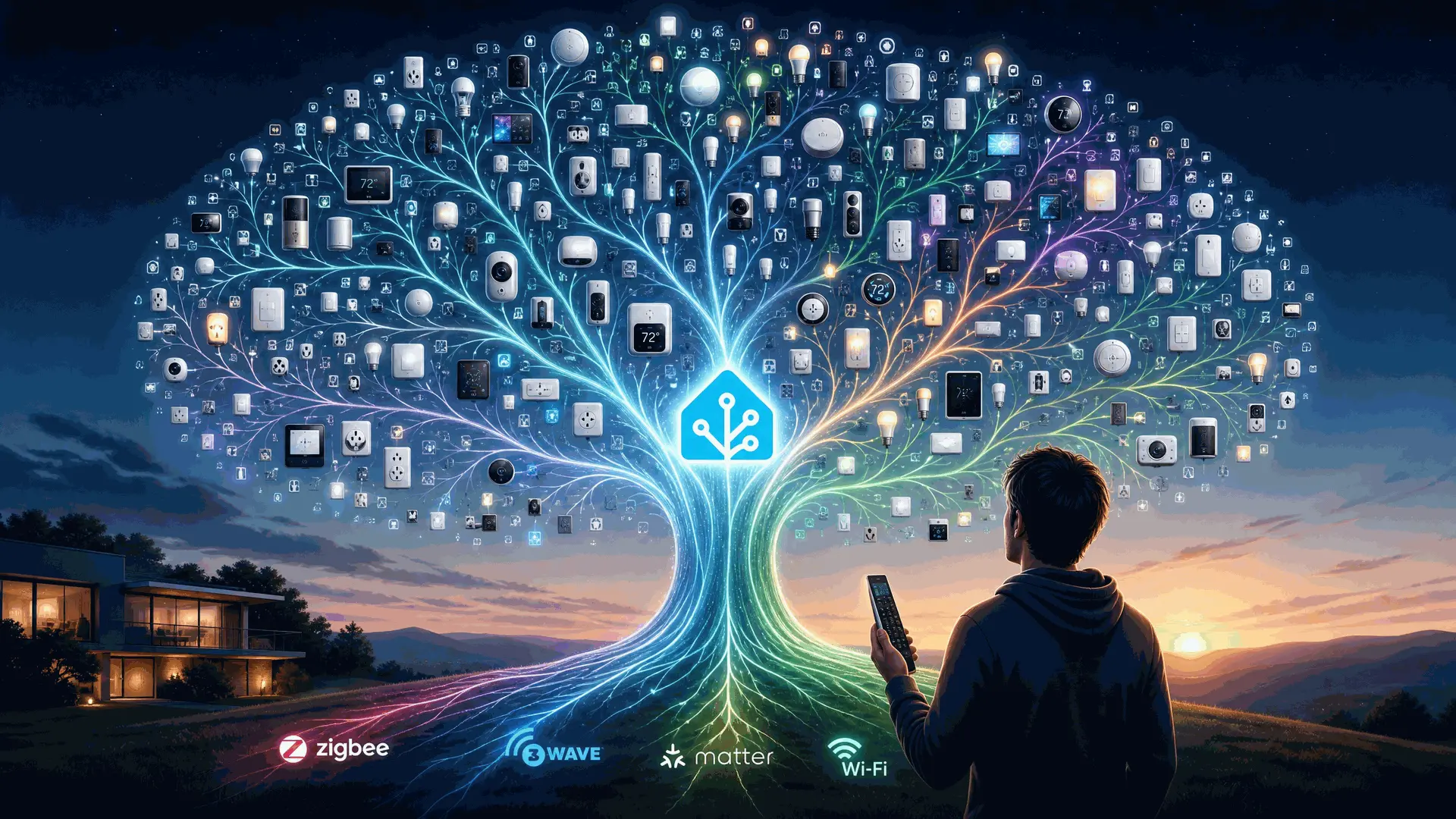
Where They Overlap — and Where They Don't
The lines are blurring more than most people realize. Control4 now supports third-party drivers and has a more open architecture than it did a decade ago. Home Assistant now has dedicated hardware that makes it easier to get started without building your own server.
But there are still fundamental differences that no amount of feature parity can erase.
Control4 is a service, wrapped in hardware, delivered by a professional. You're not just buying a system. You're buying a relationship with someone who will design, install, and maintain it.
Home Assistant is a platform, powered by community, driven by your own curiosity. You're not buying anything. You're joining something — a global network of people who believe smart homes should be open, private, and endlessly customizable.
Three Scenarios That Might Help You Decide
Let me describe three situations I've seen play out in real life.
The young family. Two working parents, two small children. They want lights that dim automatically at bedtime, a thermostat that saves energy, and maybe a few cameras to check on the kids. They don't want to configure anything. They don't have time to learn YAML. Control4 wins here, almost by default. The integrator sets everything up in a day, and the family just uses it.
The tech enthusiast. A software developer who runs Home Assistant on a dedicated server, has 150 devices connected, and treats his smart home as a creative outlet. For him, Control4 would feel like a cage. He wants to add whatever device catches his eye, write custom automations, and contribute to the community. Home Assistant is the obvious choice.
The home theater fanatic. This person has a dedicated cinema room with a projector, an AV receiver, motorized blinds, and acoustic treatments. Both platforms can handle this beautifully. The deciding factor is usually whether the homeowner wants to program the remote themselves or have someone else do it — and whether they want the freedom to swap components later without calling their integrator.
When Intelligence and Interface Have Different Jobs
We're also seeing another possibility emerge: homeowners who want Home Assistant as the intelligence behind their home, while still expecting the quality of interaction traditionally associated with professional systems.
They use high-quality physical remotes, wall panels, and dedicated controllers — interfaces designed to be reliable, intuitive, and always available — while Home Assistant handles device integration and automation logic.
This isn't really a compromise between the two worlds. It's a separation of roles.
The open platform provides the intelligence and flexibility. The physical interface provides the human connection.
And once you see the smart home that way, the choice between "open" and "professional" starts to look like the wrong question.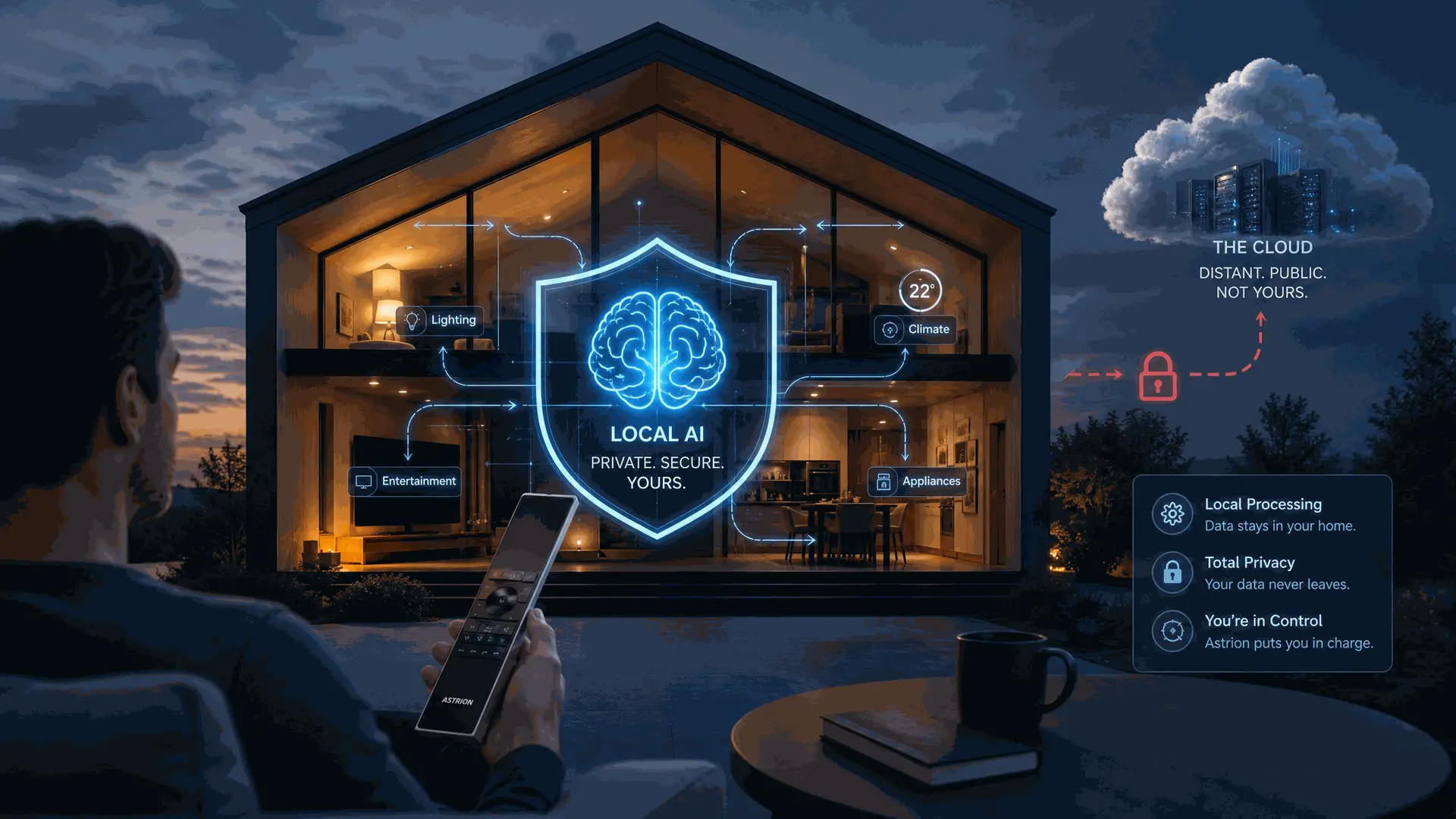
The Interface Matters More Than the Platform
One thing we've learned from watching people use both systems is that the platform itself often matters less than how you actually interact with it on a daily basis.
A Control4 system accessed entirely through a phone app feels clunky, no matter how well it's programmed. A Home Assistant setup that requires you to unlock your phone and navigate through menus every time you want to dim the lights will eventually annoy you, regardless of how powerful the automation engine is.
The physical layer of control — the remotes, the wall panels, the buttons you can find in the dark — ends up shaping your experience far more than most people anticipate when they're first planning their smart home.
The interface isn't the last layer you add after the automation is finished. It is how people actually experience the system.
A powerful automation engine is only as useful as the way people interact with it.
So, Which One Is Right for You?
If you've read this far, you probably already know the answer.
The right system isn't the one with the most features. It's the one whose trade-offs match the way you want to live.
For some people, that will still be Control4. For others, it will be Home Assistant. And increasingly, it may be both: an open platform providing the intelligence, paired with interfaces designed around the way people actually live.
My friend chose Home Assistant. Not because Control4 was wrong, but because he realized he wanted to understand and shape his own smart home.
Six months later, he has a system that does almost everything the original proposal promised. He also admits, with a slight grin, that there were a couple of weekends he'll never get back.
The right choice doesn't eliminate the trade-offs. It just makes the trade-offs feel worth it.
That's probably the simplest way I know to think about it: technology should fit the way we live, not ask us to change the way we live around it.
Home Assistant vs Control4: Which Is Right for You?